LISA BECK

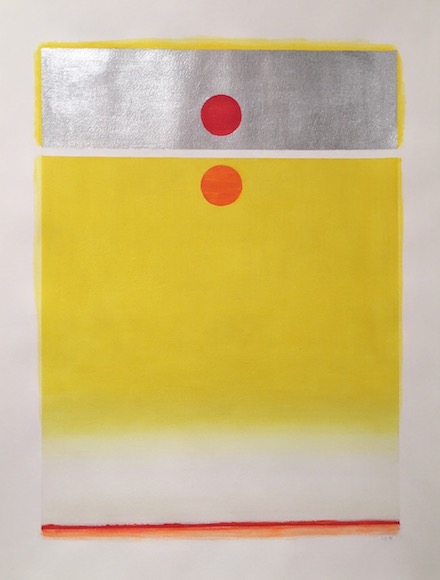
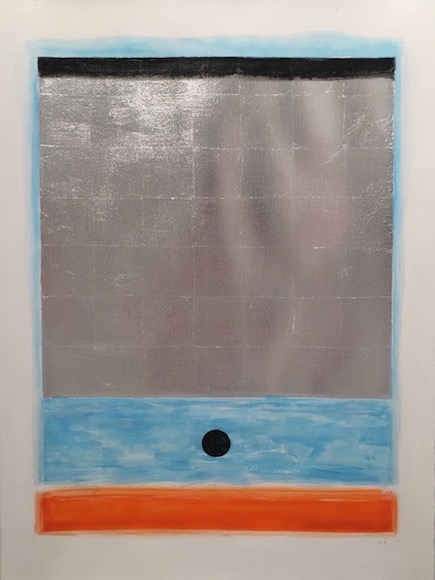
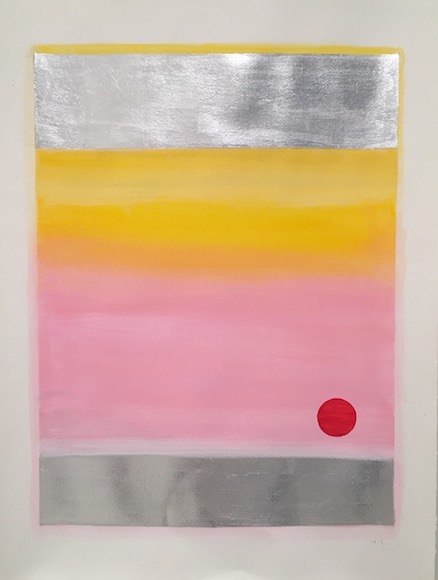
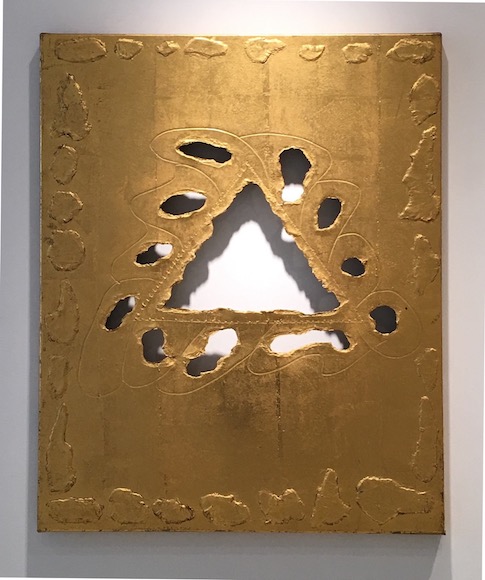
Further I,2019
Acrylic and aluminum leaf (silver) on paper
24 x 18 inches (61 x 46 cm)

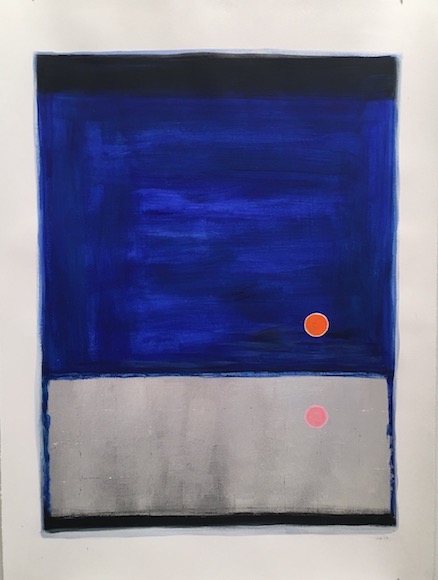
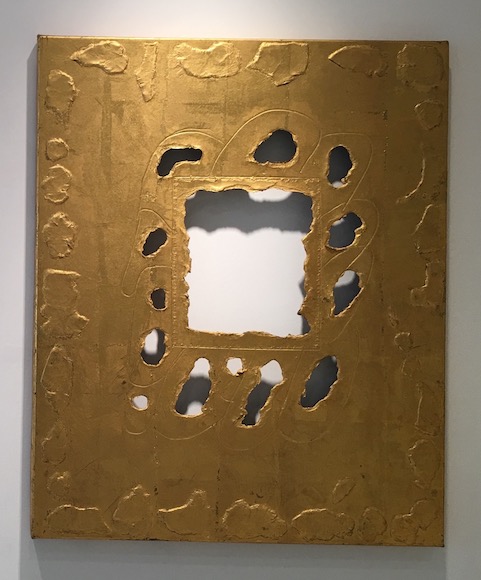
Further II,2019
Acrylic and aluminum leaf (silver) on paper
24 x 18 inches (61 x 46 cm)

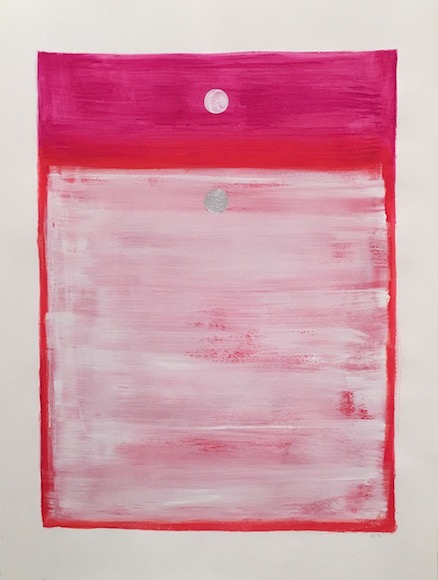
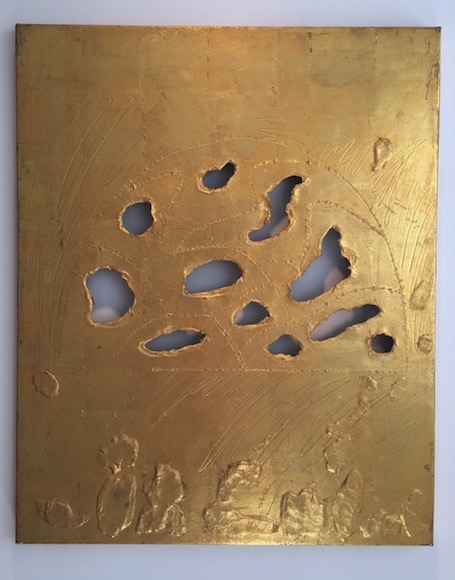
Further III,2019
Acrylic and aluminum leaf (silver) on paper
24 x 18 inches (61 x 46 cm)

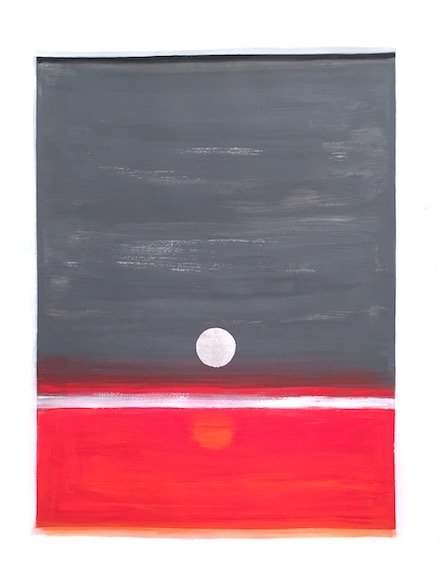
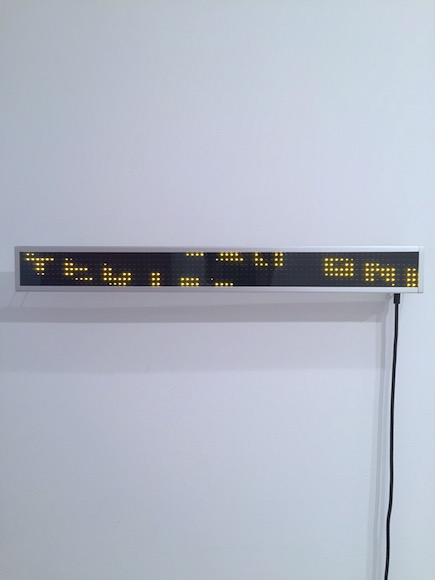
Further IV,2019
Acrylic and aluminum leaf (silver) on paper
24 x 18 inches (61 x 46 cm)

Further V,2019
Acrylic and aluminum leaf (silver) on paper
24 x 18 inches (61 x 46 cm)

Further VI,2019
Acrylic and aluminum leaf (silver) on paper
24 x 18 inches (61 x 46 cm)

Works on paper
Lisa Beck
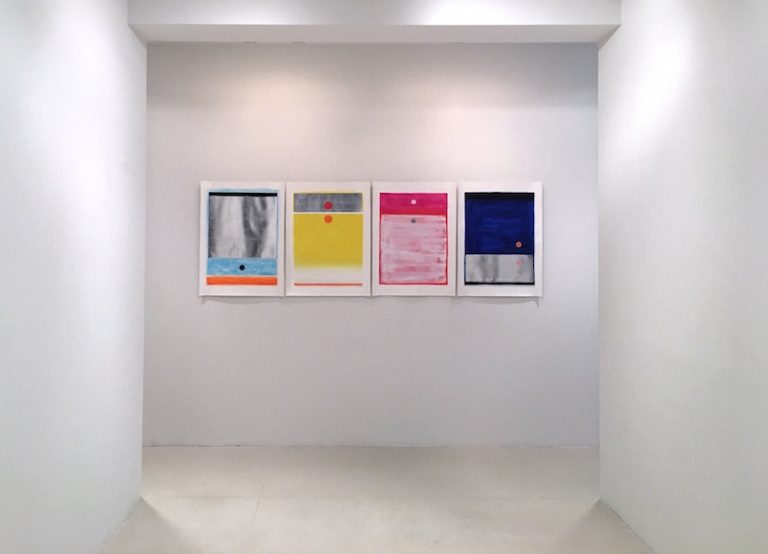
Installation view
Lisa Beck works with a variety of mediums and modes, including painting, sculpture and installation (often in combination), involving inner and outer space, landscape, reflection, and the paradoxical relationship of something and nothing.Â
Since the 1980s, her work has been exhibited in the US and internationally in venues including Feature Inc. (NYC), Elizabeth Dee Gallery (NYC), Anton Kern Gallery (NYC), Galerie Samy Abraham (Paris), Circuit, (Lausanne), PS1 (Long Island City), White Columns, (NYC), MAMCO â MuseĂ© dâ Art moderne et contemporain (Geneva), and the New Britain Museum of American Art (New Britain, CT). Â
In 2013, âEndlessâ, a survey show of works from 1986-2012, was presented at the Fort du Brussin, a hors le murs exhibition by La Salle de Bains, in Lyon, France.
Lisaâs work has been included in publications including Painting Abstraction: New Elements in Abstract Painting by Bob Nickas,(2009, Phaidon Press) and Are You Experienced? by Ken Johnson (2011, Prestel). In 2015, The Middle of Everywhere, a monograph on her work, was published by Galerie Samy Abraham and La Salle de Bains. Â
Lisa was a recipient of the 2012-13 Marie Walsh Sharpe Space Program Studio Residency in Brooklyn.Â
Lisa Beck received a BFA from RISD. She lives and works in Brooklyn, NY.Â
Â
SELECTED ONE PERSON EXHIBITIONS
2019
Always Now, The Suburban, Milwaukee, WI
Send and Receive, The Gallery at the St. Kate, Milwaukee WI
2018
New Works, May 68, NY
Solo presentation at Art Verona with Vin Vin at Ruyter, Vienna
2017
Rising and Falling , Elizabeth Dee, New York
New small works, Galerie Samy Abraham, ParisÂ
2016
The House of Eternity, Galerie Samy Abraham, ParisÂ
2015
The Middle of Everywhere, Circuit, Lausanne, Switzerland, curated by Caroline Soyez-Petithomme Â
2014
Observatory, Galerie Samy Abraham, Paris Â
You Are Here, 33 Orchard, New YorkÂ
2012
Endless, off site project of La Salle de Bains at Fort du Bruissin, Lyon, FranceÂ
Looking Through, Galerie Lisa Ruyter, Vienna Â
To Here Knows When, Feature, New YorkÂ
2011
Between Days, Feature Inc., New York Â
2019
VERTIGO, Baahng Gallery, New York
Masterpieces, Galerie Thomas Bernard, Paris
Social Photography VII, carriage trade, NYC
Thirty Years of Dutch Courage, Cokkie Snoei, Rotterdam
Notebook, curated by Joanne Greenbaum, 56 Henry, NYC
2018
Le Bon Cout, Galerie Samy Abraham, Paris
Polarities, TOTAH, NYC
The Anthology of Interplanetary Folk Art Vol. 2: The Rings of Saturn, organized by Bob Nickas, Kerry Schuss Gallery, NYC
Lisa Beck and Ranier Lericolas, Galerie Thomas Bernard, Paris
2017
Abandoned Luncheonette, Jeff Bailey Gallery, Hudson, New York
EDGE: Lisa Beck, Eric Brown, Rachel Hellmann, Mary Judge, Marilyn Lerner, Douglas Melini, Ann Pibal, Kate Shepherd, Cary Smith, Li Trincere, Jan van der Ploeg, Philip Slein Gallery St. Louis, MO
Thought Forms, Lisa Beck, Lydia Dona, Joan Waltemath, C. Grimaldis Gallery, Baltimore, MDÂ
Color Block, Triple V, Paris
Playground, Galerie Emmanuel Hervé, Paris
Vagary of Abstraction, LMAKÂ Gallery, New York
Doomtown, Portland Institute of Contemporary Art, Portland, OR
Beyond Black and White, Westbeth, NY, curated by Henry Brown and Li TrincereÂ
2016
GEOMETRIX: Line, Form, Subversion, Organized by Andrea Pollan and Curator’s Office, Washington DCÂ
Strange Abstraction, Fredericks and Freiser, NY
ALL OVER, curated by Samuel Gross, GALERIE DES GALERIES , Galeries Lafayette, Paris
GVA< > JFK, MAMCO (Musee de lArt Moderen et Contemporain), Geneva, curated by Lionel Bovier
that old school dystopia, Theodore:art, Brooklyn, curated by Stephanie Theodore & Wendy Cooper
Non Figuratif : un regain dâintĂ©rĂȘt , Centre d’art contemporain Meymac, France Â
First Exhibition, Elizabeth Dee Gallery, New York Â
Kevin Larmon/ Lisa Beck, CB1 Los Angeles
2015
The Painter of Modern Life, Anton Kern Gallery, New York, curated by Bob NickasÂ
Fertility, 33 Orchard, New York
Iterations, Theodore:Art, Bushwick  Â
Improvised Showboat, 55 Washington St, Brooklyn
Choices Paris, with Galerie Samy Abraham, curated by Alfred Pacquement, ParisÂ
Unexpected Pieces, Galerie Samy Abraham, Paris
Deep End, The Wassaic Project, Wassaic, NY
30/130 Thirty Years of Books and Catalogs, etc. Bob Nickas at White Columns, White Columns, New York
Thirty Shades of White, Praz-Delavallade, Paris
2014
Real Estate, Ventana 244, Brooklyn, NY
No Ground But Say Ground, Halsey McKay Gallery, East Hampton, NY Â Â
The Last Brucennial, 837 Washington St, New York
Inhabiting Ten Eyck, Storefront Ten Eyck, Bushwick Brooklyn, curated by Karin Bravin
Das Optische Unbewusste / The Optical Unconscious, Kunst(zeug)haus, Rapperswil, Switzerland
curated by Fred Fischli and Niels Olsen, in collaboration with Bob Nickas
This One’s Optimistic: Pincushion, New Britain Museum of American Art, New Britain, CT , curated by Cary Smith
Another, Once Again, Many Times, More, Martos Gallery, East Marion, NY Â
Let’s Go Let Go – In Memoriam Hudson, 33 Orchard, New York
Raving Disco Dolly on a Rock ‘n’ Roll Trolley, envoy enterprises, NY Â
Dark Map, Lesley Heller Workspace, New York
The Egg, LABspace, Great Barrington, MAÂ
2013
X-tra, Lesley Heller Workspace, NY Â
Diamonds, Diamonds, Gallery Diet, Miami, curated by Daniel Feinberg Â
Swing State, Jane Kim Gallery, NY
The Shining Path, Galerie Samy Abraham, Paris Â
LAT. 41° 7′ N., LONG. 72° 19′ W, Martos Gallery, East Marion, New York  Â
2012
THING, group exhibition curated by Susan Jennings, West Cornwall, CT
Creature from the Blue Lagoon, Martos Gallery, Bridgehampton, NY Â
Exposition d’artistes nĂ©(e)s entre le 22 juin et le 22 juillet, Galerie de Multiples, Paris
Tell the Children, La Salle des Bains, Lyon, France Â
2011
bodybraingame, Rhona Hoffman Gallery, Chicago, curated by Hudson
The 2011 Bridgehampton Biennial, Martos Gallery, Bridgehampton, NY; organized by Bob Nickas Â
We Regret To Inform You There Is Currently No Space or Place for Abstract Painting, Martos Gallery, New York
Lisa Beck / Philippe Richard, Theodore: Art, New York
2010
Pull My Daisy, Galerie Lisa Ruyter, Vienna  Â
Black Is the Color of My True Loveâs Hair, NP Contemporary Art Center, New York
Daniel Hesidence Curates, Tracy Williams, Ltd., New York  Â
Lisa Beck / Olivier Mosset, Bell Street Project Space, Vienna
Wall-to-Wall, Daniel Weinberg Gallery, Los Angeles
Skulture, Feature Inc., New York
Townie, Foley Gallery, New York, curated by Carl d’Alvia
Portrait de lâartiste en motocycliste, Le Musee des Beaux Artes, Chaux les Fonds, SwitzerlandÂ
Â
2018
GVA< >JFK, MAMCO Journal , edition No1, p 28
Scott, Andrea K., âStrange Attractors,â The New Yorker, October 16 Â
2017
“One Question, One Answer: Lisa Beck”, Romanov Grave Â
Butler, Sharon. “Lisa Beck: So-called opposites“, Two Coats of Paint
Saltz, Jerry. “The 10 Best Art Achievements of 2017” Â Â
Halle, Howard. “Lisa Beck: Rising and Falling”, Time Out New York
Elizabeth Dee Exhibits Lisa Beck’s New Paintings. artdaily.org,Â
2016
Saltz, Jerry. Critic’s Pick, that old school dystopia, July 4, nymag.com
2015
Soyez-Petithomme, Caroline, ed.The Middle of Everywhere, essays by Samuel Gross, Bob Nickas, Caroline Soyez-Petithomme, La Salle de Bains, Galerie Samy AbrahamÂ
Lescaze, ZoĂ«. Critic’s Pick: The Painter of Modern Life, Artforum Â
Chang, Chris. âFive Points with Bob Nickasâ, Art in AmericaÂ
“5 Must See Gallery Shows in New York”, Art Info
Halle, Howard. “The Painter of Modern Life”, TIme Out New York, April 1Â
2014
Goleas, Janet. ART REVIEW: âAnother, Once Again, Many Times Moreâ on the North Fork,
Hamptons Art Hub, posted 9 August, 2014Â
Hollingsworth, Dennis. “This One’s Opptimistic: Pincushion.” Â http://www.dennishollingsworth.us
Lequeux, Emmanuelle. “Observatory,” Le Monde, 26 JanuaryÂ
2013
Saltz, Jerry. âMoMAâs Inventing Abstraction Is IlluminatingâAlthough It Shines That Light Mighty Selectively,”
New York Magazine, January 14, Â vulture.com, 6 JanuaryÂ
Morais, Pedro. âAccidents Geometriques,â Les Inrockuptibles, 30 January
Pernet, Hugo. ” Lisa Beck Endless,” Zero Quatre, spring 2013
Depuis 1999, Premier catalogue rétrospectif de La Salle de bains
Nickas, Bob. Annual Magazine, issue n°6 Â
Crest, Russ “.Lisa Beck’s Rorshach Installations”, Beautiful DecayÂ
2012
yes, no, something, nothing, never, always, Feature Inc, New York- catalog of selected works by Lisa Beck 1985-2010, interviews with Hudson and Bob NIckas Â
Kazakina, Katya. âArt in the Hamptons,â Bloomberg.com, 1 August Â
Miller, Michael H. âBob Nickas Curates Summer Show in Bridgehampton One Last Time,â GalleristNY.com, 22 May Â
Fessler, Anne Katrin. Review of “Looking Through”, Der Standard, 20 June Â
2011
Nickas, Bob. Catalog of the Exhibition, 2nd Cannons Publications, Los Angeles (reproduction)
Indrisek, Scott. âThe Pleasures of the Prosaic at the Bridgehampton Biennial,â Modern Painters, posted 15 August Rosenberg, Karen. “All Nooks, Crannies, Bedrooms and Trees are Backdrops for Art,” New York TImes,
8 August C5 (reproductions)Â Â Miller, Michael H. âLearning from Bridgehampton,â New York Observer, 12 July Â
Miller, Michael H. âSo Long, Chelsea! Bob Nickas to Liven Up the Art World this Summer with Bridgehampton
Biennial,â New York Observer, 1 July Â
Johnson, Ken. Are You Experienced?: How Psychedelic Consciousness Transformed Modern Art, Prestel Publishing, New York
2010
Review of âSkulture,â Goings On About Town, New Yorker, 25 January, 12
Rubin, David S., ed. Psychedelic: Optical and Visionary Art Since the 1960s, with essays by David S. Rubin,
Robert C. Morgan and Daniel Pinchbeck, San Antonio Museum of Art in association with MIT Press, Cambridge, MA, 33, 109
La Musee de Beaux Arts, La Chaux-de-Fonds, Switzerland
Frac des Pays de la Loire, Carquefou, France
Tang Museum, Saratoga Springs, NY USA
ALEXIS de CHAUNAC

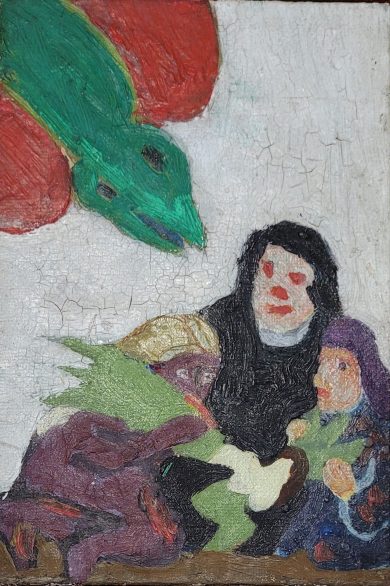
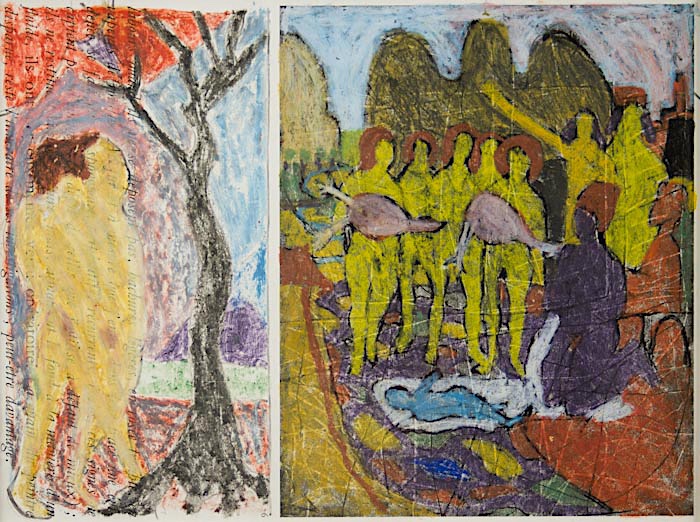
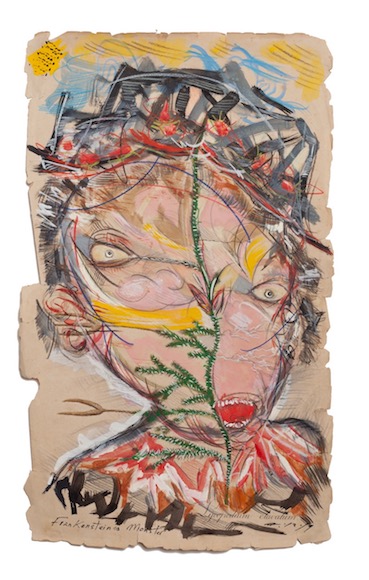
FrankensteinÊŒs Monster (Botanica) 1828
2019
Ink, wax, pigment and color pencils on manuscript paper from 1828 (Framed in Maple wood and glass)
18.5 x 11.5 in. (47 x 22 cm)

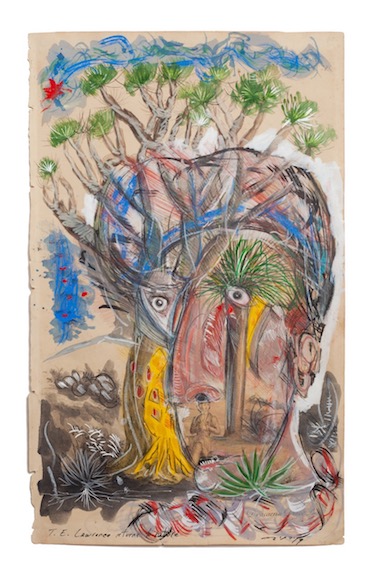
T.E. Lawrence returns to nature (Botanica) 1828
2019
Ink, wax, pigment and color pencils on manuscript paper from 1828 (Framed in Maple wood and glass)
18.5 x 11.5 in. (47 x 22 cm)

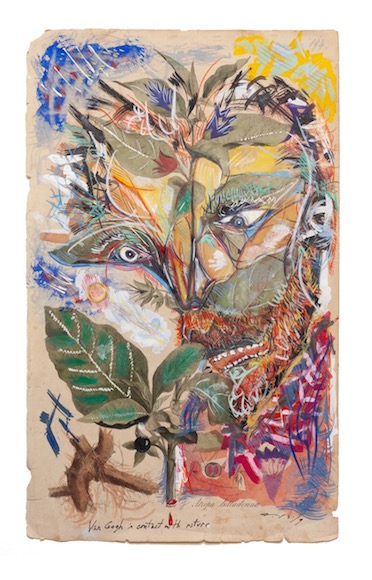
Van Gogh in contact with nature (Botanica) 1828
2019
Ink, wax, pigment and color pencils on manuscript paper from 1828 (Framed in Maple wood and glass)
18.5 x 11.5 in. (47 x 22 cm)

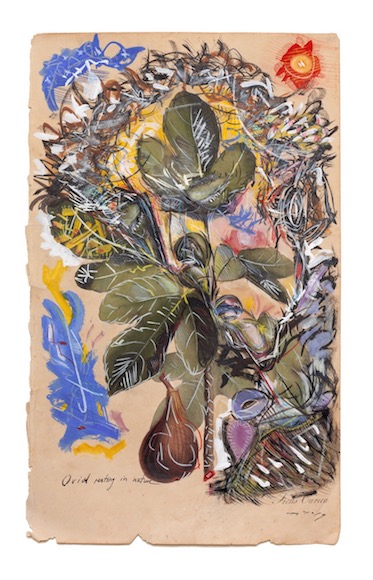
Ovid resting in nature (Botanica) 1828
2019
Ink, wax, pigment and color pencils on manuscript paper from 1828 (Framed in Maple wood and glass)
18.5 x 11.5 in. (47 x 22 cm)

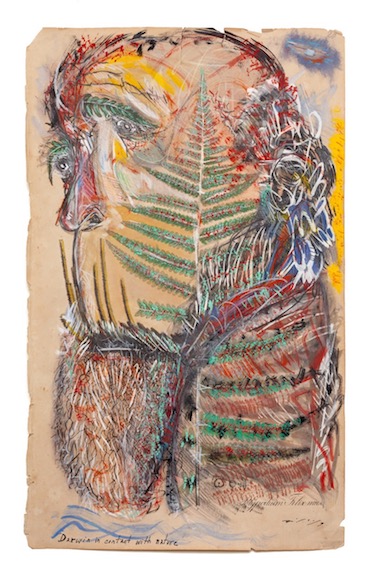
Darwin in contact with nature (Botanica) 1828
2019
Ink, wax, pigment and color pencils on manuscript paper from 1828 (Framed in Maple wood and glass)
18.5 x 11.5 in. (47 x 22 cm)
ALEXIS de CHAUNAC
(French-Mexican, b. 1991 in New York, NY, lives and works in New York and Paris, France)
Rapidly up-and-coming artist, Alexis de Chaunac draws from literature, religion, mythology, art history, politics, and his own multicultural background to produce exuberant, mixed-media drawings. He describes drawing as âa transcendental language that anyone can understand.â He works quickly, often with ink because of its fluidity, producing rich, multilayered works filled with faces and laden with cultural references. De Chaunac draws inspiration from such diverse artists as Rembrandt, Goya, Delacroix, Schiele, Picasso, and Francis Bacon, whom he groups together as âchroniclers of the human condition.â His own artistic rendering of humanity comes from literature. He claims influences from the Scriptures to great epics and all the way to Beat Generation writers such as William S. Burroughs. Referring to his practice as contemporary myth making, he takes archetypes such as Oedipus, Jesus Christ or Dante âworking out of them to explore the primitive aspects of the human being.â
Born in New York and raised in Mexico City and Paris, he grew up surrounded by art and culture, drawing in the studio of his grandfather â a renowned Mexican artist Jose Luis Cuevas. He then lived for ten years in Paris immersed in European culture only to return to the US to study at the Sarah Lawrence College, NY.
Â
BIOGRAPHY
1991 Born in New York, NY
Lives and works in New York and Paris, France
Â
EDUCATION
2014 B.A., Sarah Lawrence College, Bronxville, NY
2013 History of Art, University of Oxford, UK
Â
Â
SELECTED SOLO EXHIBITIONS
2019 Alexis de Chaunac, Botanica, Silas von Morisse, Sargentâs Daughters, New York, NY
2018 Alexis de Chaunac, Botanica Magnifica, Silas von Morisse, ChaShaMa, New York, NY
2017 Alexis de Chaunac, Rebelde con Causa, XLV FIC, Universidad de Guanajuato, Mexico
2015 Alexis de Chaunac, A Dance with Life and Death, Silas von Morisse Gallery (formerly ART 3), Brooklyn NY
        Alexis de Chaunac, Mala Sangre/ Bestiario, Pinacoteca Diego Rivera, Xalapa, Mexico
2014 Alexis de Chaunac, Mala Sangre, Instituto Cultural de LeĂłn, Guanajuato, Mexico
        Alexis de Chaunac, Mala Sangre, Museo Iconografico del Quijote, Guanajuato, Mexico
Â
SELECTED GROUP EXHIBITIONS
2017 7102 Fantasma semiĂłtico (s)cituacionista, Museo de Arte Carillo Gil, Mexico
2014 Inaugural Exhibition, ART 3 Gallery, Brooklyn, NY
2013 What is an Art Book?,Garis & Hahn Gallery, New York, NY
2010 DRAW, the largest contemporary drawing exhibition, curated by Erik Foss and Miguel Calderon, Museo de la Ciudad de Mexico, Mexico
Â
COLLECTIONS
Private collections in New York, Los Angeles, Miami, Dallas, Mexico and Paris
Categories: artists
Tags: Alexis De Chaunac
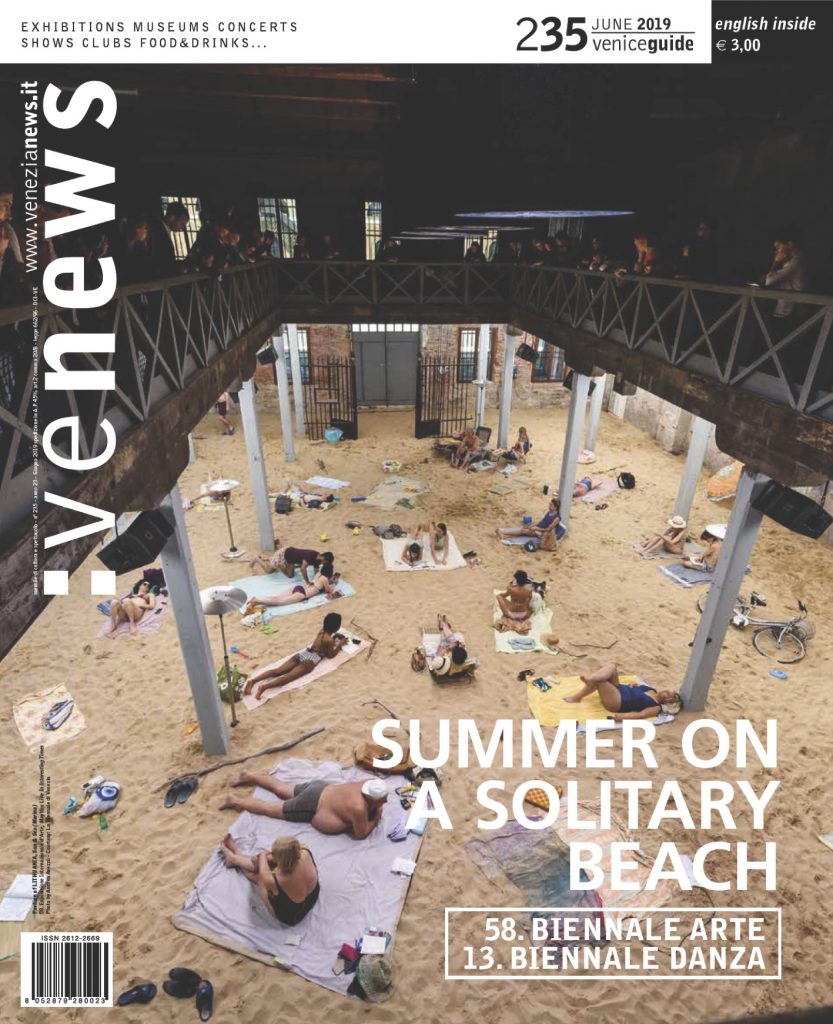
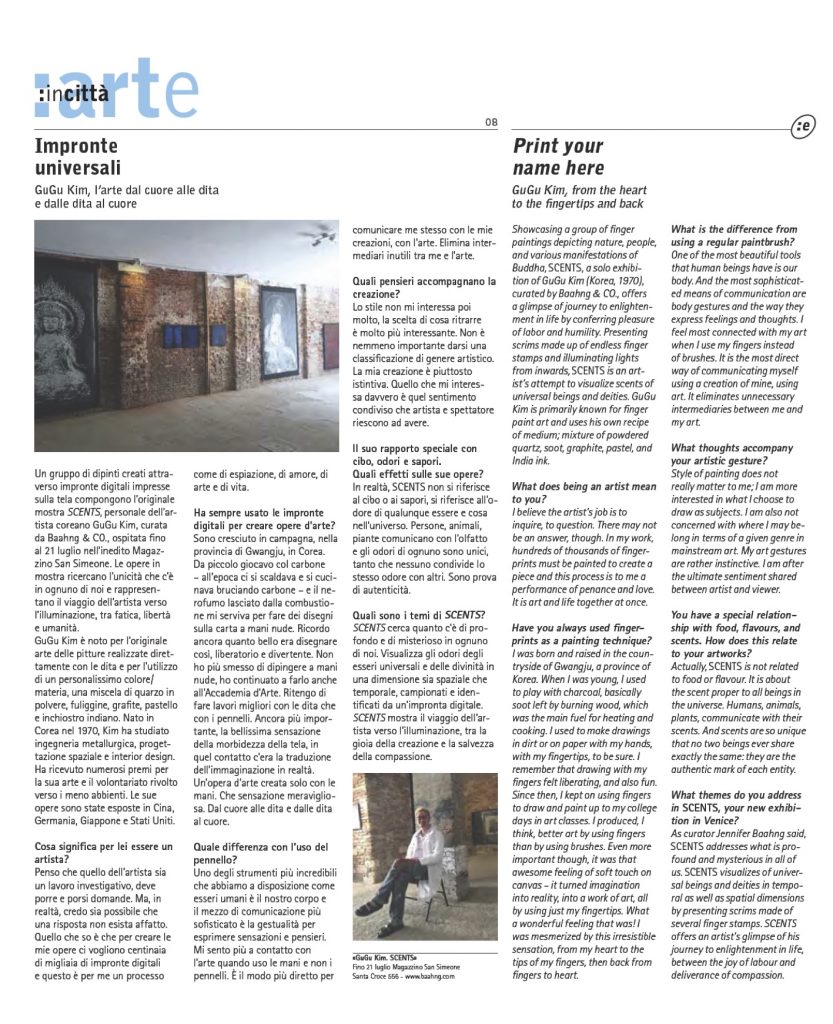
Venezia News reviews SCENTS
June 2019, Vol. 235, P8

Vol. 235

Vol. 235, Page 8
I believe the artistâs job is to inquire, question, though, there may not be an answer. In fact, I would rather be worn out than rotting away.  In my work, hundreds of thousands of fingerprints must be painted in order to create a work and this process is to me a performance of penance, love, art, and the life itself.
Have you always used fingerprints as a painting technique?
I was born and raised in the countryside of Gwangju, a province of Korea. When I was young, I used to play with charcoal, basically soots left from burning woods which was the main means of heating or cooking. And I used to make drawings in dirt or on paper with my hands, more precisely finger tips.  I remember that drawing with my fingers felt liberated but also fun.  Since then, I kept on using fingers to draw and paint throughout up to college days in art classes. I produced, I thought, better works by using fingers than using brushes. More importantly though, it was that awesome feeling of soft touch on canvas which in turn making imagination a reality, a work of art, with mere finger tips.  What a wonderful feeling that was!  I was mesmerized by this irresistible sensation felt from heart to tips of fingers, then back from the tips of fingers to heart.
What is the difference from using a regular paintbrush?
One of the most beautiful tools that human beings are endowed with is our body.  And most sophisticated means of communication is with body gestures that express feelings and thoughts. I feel most connected with my art when I use fingers instead of brushes.  It is most direct way of communicating myself with my creation, an art. It eliminates unnecessary intermediaries between me and my art.
What thoughts accompany your artistic gesture?
Style of painting does not really matter to me, I am more interested in what I choose to draw as subjects.  I am also not concerned with where I may belong in terms of, so called, a mainstream art.  My artistic gestures are rather instinctive. I am after the ultimate sentiment shared between artist and viewer.
You have a special relationship with food, flavors and scents. How does this relate to your artworks?
Actually, SCENTS is not related or referred to food, flavors, or pregnancies.  It is about scents of all beings in the universe. Humans, animals, plants, do communicate with their scents for affection to survival.  And scents are uniquely unique that no beings ever share exactly same scents as if they are the authentic markings for each beings.
What themes do you address in SCENTS, your new exhibition in Venice?
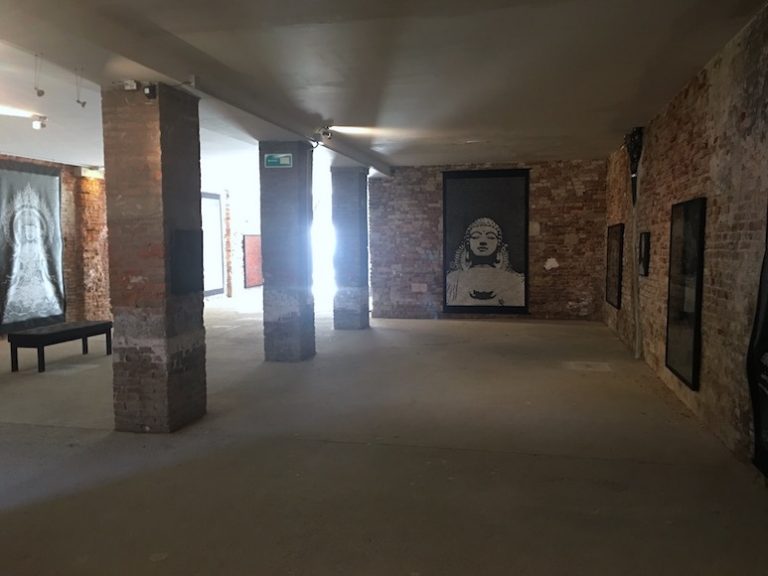
As curator Jennifer Baahng states, SCENTS addresses âProfound and Mysteriousâ in all of us. SCENTS attempts to visualize scents of universal beings and deities in temporal as well as spatial dimensions, presenting scrims made up of endless finger stamps.  SCENTS offers an artistâs glimpse of journey to enlightenment in life by conferring joy of labor and deliverance of compassion
Related:
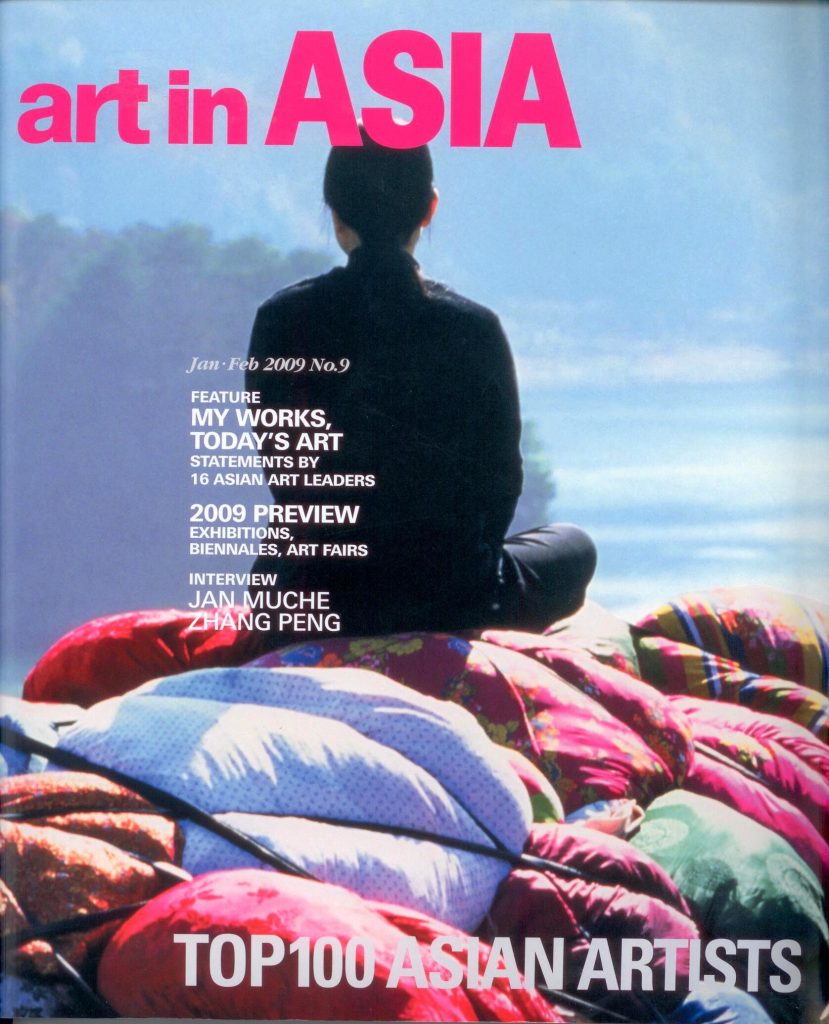
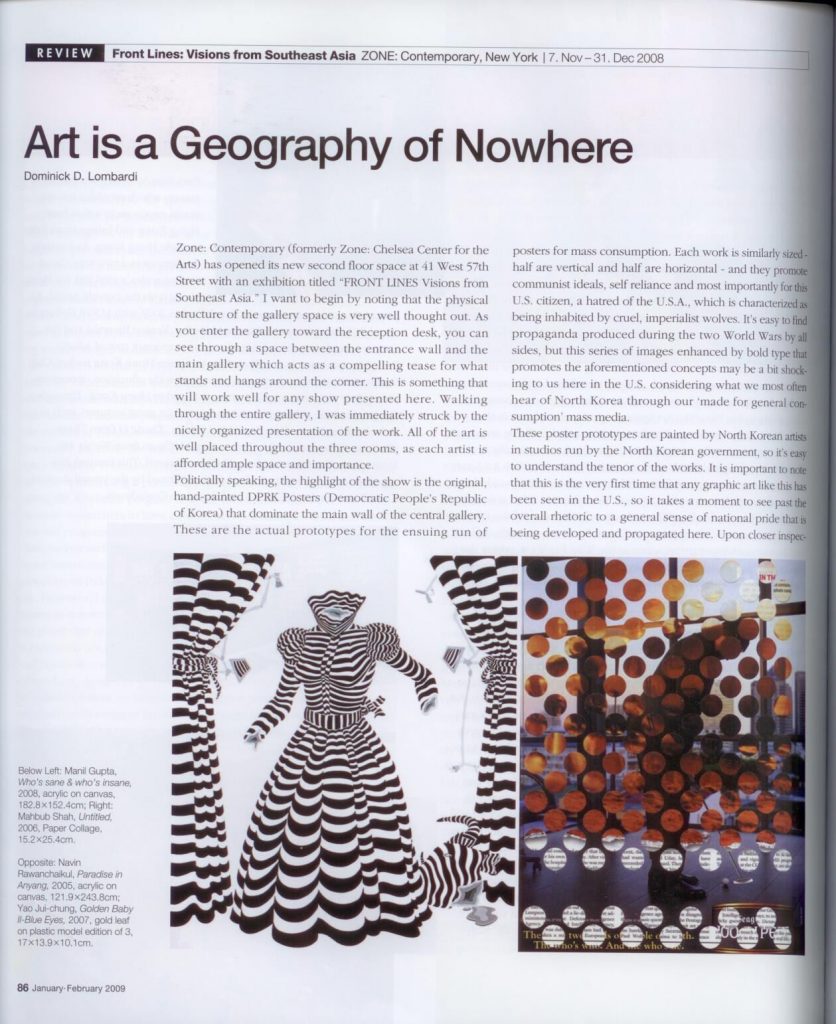
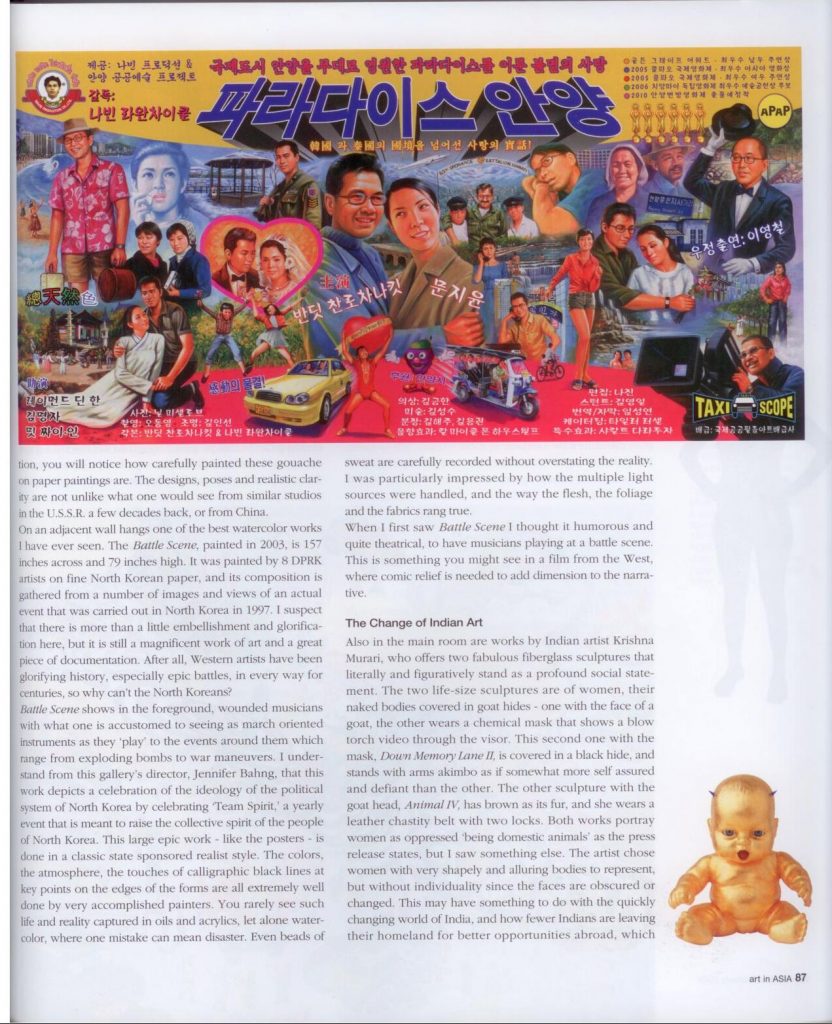
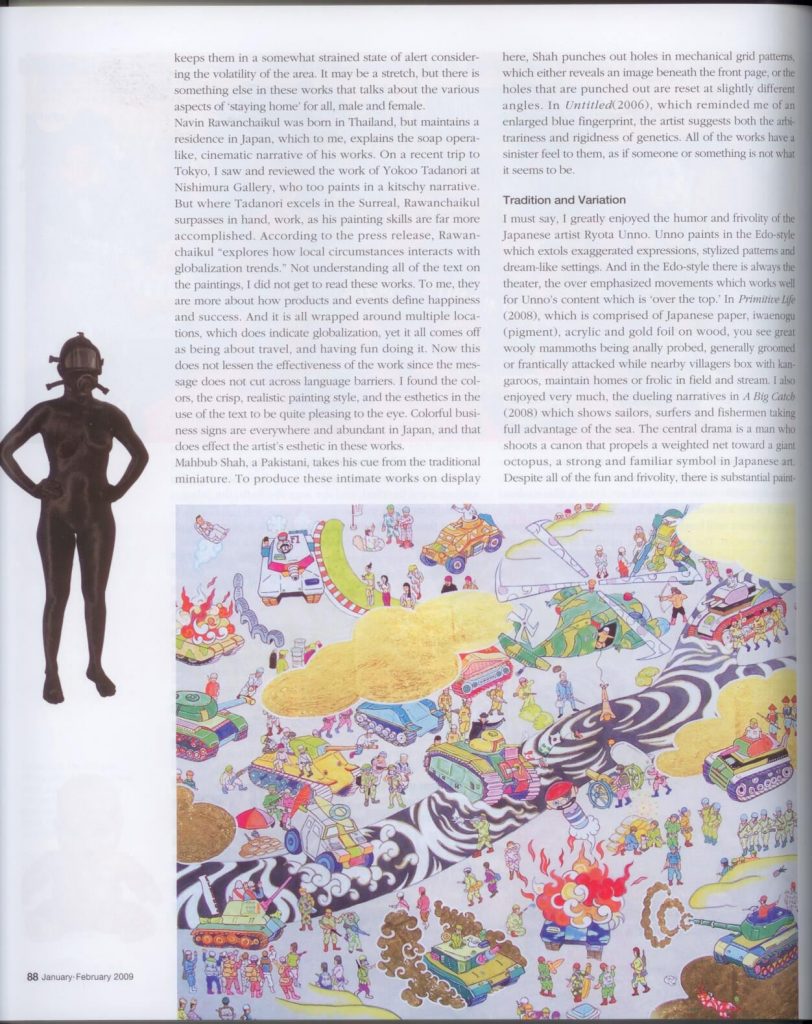
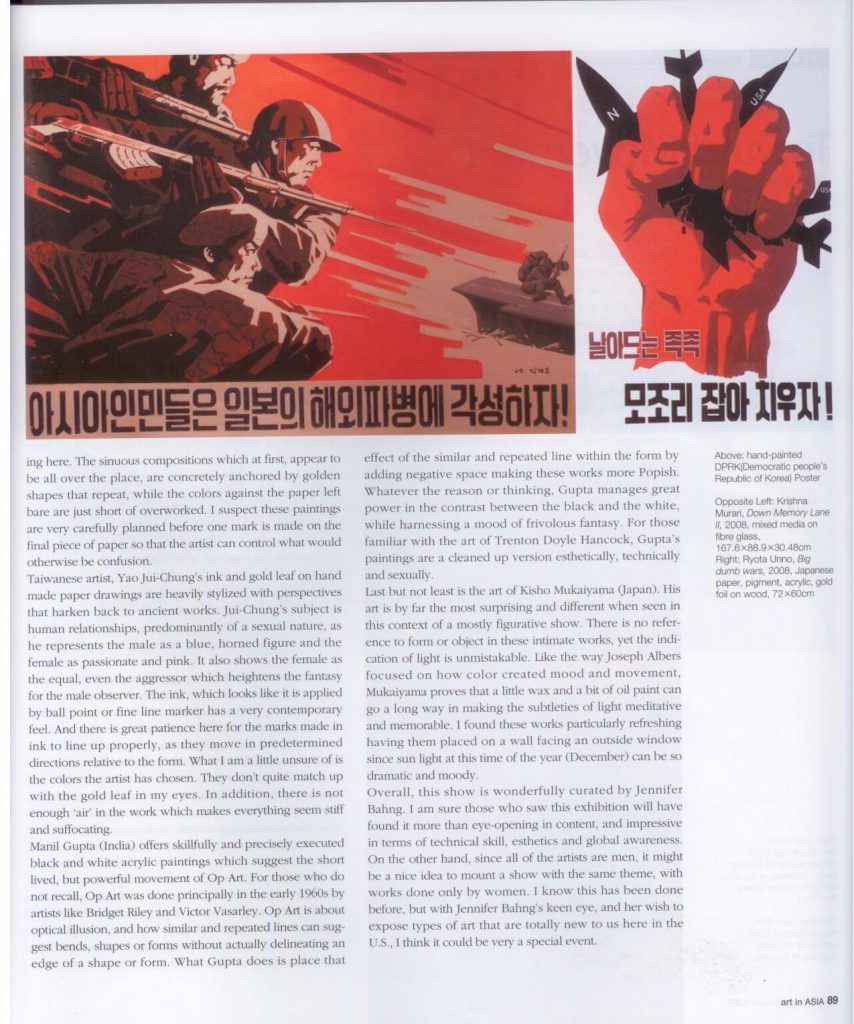
art in ASIA review on Front Lines: Visions from Southeast Asia
Jan Feb 2009 No. 9, P86 - 89, by Dominick D. Lombardi


Related:
art in ASIA review on Front Lines: Visions from Southeast Asia
Categories: news
Tags: Front Lines
New York Magazine on “FACE: Scavenging Identity”
New York Magazine
ART CANDY section
Â
Dirty, Hairy
by Rachel Wolff, Â July 18, 2007
Â
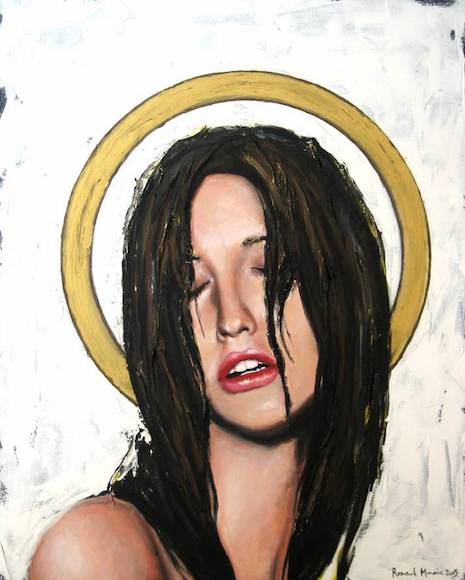
Zwirner & Wirth isn’t the only gallery taking a studied approach to their summer season. The Zone: Chelsea Center for the Arts has assembled an international roster of painters, photographers, and video artists to pay homage to portraiture as a medium for a group show titled “FACE: Scavenging Identity,” up through August 11. Parisian artist Renaud Muraire, who has several works up in the show, deifies modern beauties, dressing our “icons” with the same sort of signifiers once used to suggest divinity and the sublime. Icon #2(left), is part Odilon Redon (with an uncanny resemblance to his 1890 Les Yeux Clos), part early Renaissance, and part [enter upscale designer name here] perfume ad (dirty hair, inexplicable ecstasy). âRachel Wolff
Â
Source:
http://nymag.com/daily/entertainment/2007/07/dirty_hairy.html
Related:
Categories: news
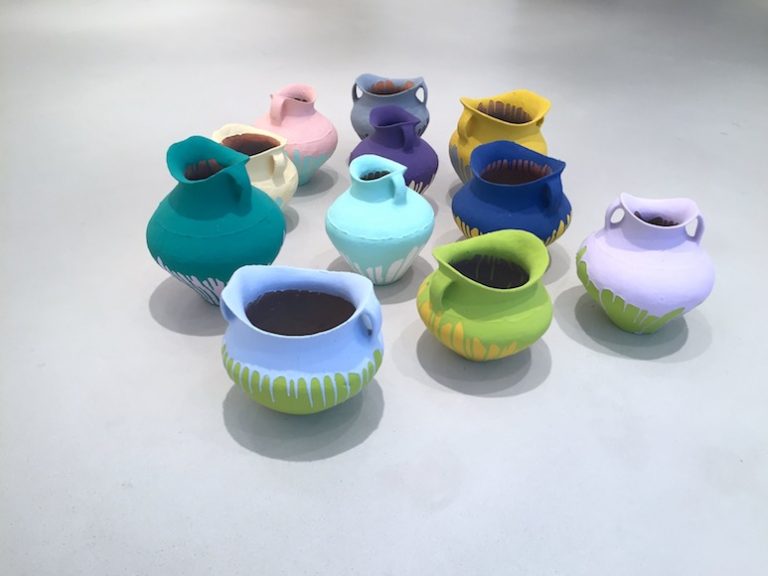
AI WEIWEI

Colored Vases
Set of 11, approx. 8.8 x 8.3 x 8.3 in. each (22 x 21 x 21 cm)

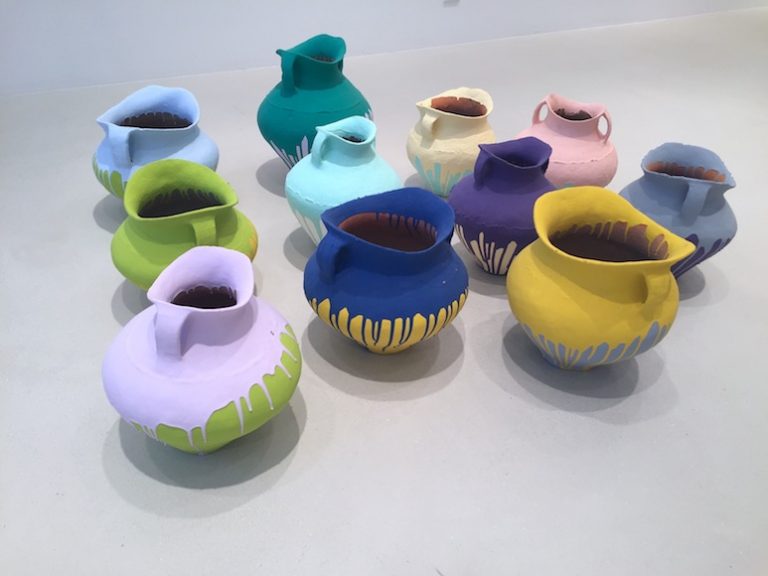
Colored Vases
Set of 11, approx. 8.8 x 8.3 x 8.3 in. each (22 x 21 x 21 cm)
Categories: artists
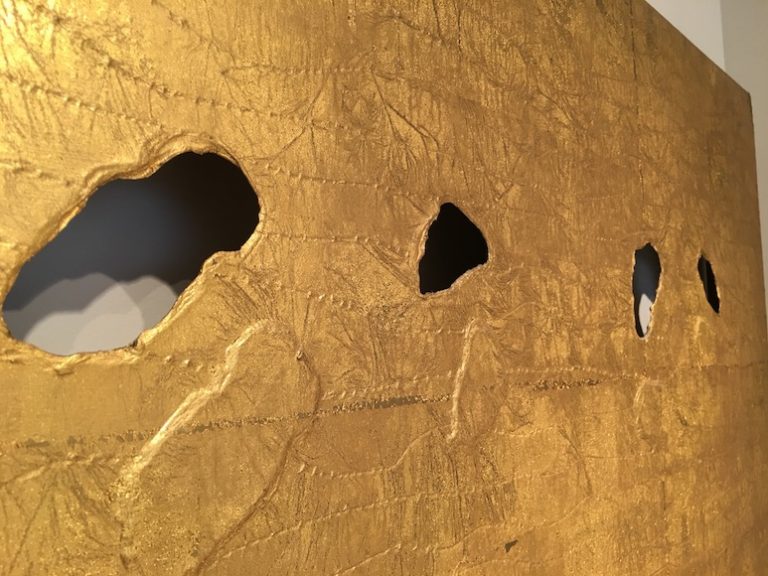
NOBUO SEKINE

Phase Conception
1988
Gold foil, acrylic paint on layers of thick Japanese hand-made paper
64 x 89 x 2.5 in. (163 x 226 x 6.4 cm), detail

Phase Conception
1988
Gold foil, acrylic paint on layers of thick Japanese hand-made paper
31.5 x 25.7 in (80.1 x 65.2 cm)

Phase Conception
1988
Gold foil, acrylic paint on layers of thick Japanese hand-made paper
31.5 x 25.7 in (80.1 x 65.2 cm)

Phase Conception
1988
Gold foil, acrylic paint on layers of thick Japanese hand-made paper
31.5 x 25.7 in (80.1 x 65.2 cm)
Born 1942 in Saitama prefecture, Japan.
Â
Graduated in 1968 with a M.F.A. in Painting, studying under artist Yoshishige Saito.
Â
From 1968 into the 1970s, Sekine worked internationally as a central figure of âMono-haâ (translated literally as âSchool of Thingsâ), a movement considered instrumental in the formation of postwar Japanese art.  PhaseâMother Earth, an earthwork first constructed in Suma Rikyu Park, Kobe, in 1968, is widely recognized as marking the beginning of Mono-ha, and as one of the most iconic works of this period in Japan.
Â
In 1970, Sekine represented Japan in the Venice Biennale with Phase of Nothingness, consisting of a large natural stone supported by a mirrored stainless steel column. The sculpture is now in the permanent collection of the Louisiana Museum of Modern Art in HumlebÊk, Denmark. Sekine remained in Europe after the Biennale, exhibiting in Italy, Switzerland, and Denmark. Informed by his observations on art and architecture, urban and public space in Europe, Sekine returned to Japan to establish Environmental Art Studios, a public art agency, in 1973.
Â
From 1978 to 1979, Sekine returned to Europe for the traveling exhibition of his work Phase of NothingnessâBlack. The solo exhibition toured from the KĂŒnsthalle Dusseldorf, Germany, to the Louisiana Museum of Modern Art, HumlebĂŠk, Denmark; the Kröller-MĂŒller Museum, Otterlo, Netherlands; and the Henie-Onstad Art Centre, HĂžvikodden, Norway.
Â
In 1993, Sekine and PhaseâMother Earth were cited by 30 participating critics, curators, and journalists in the survey âSengo bijutsu besuto tenâ (Postwar art best ten), featured in the prominent art magazine Bijutsu ShinchĆ.
Â
In 2001, Sekine was included in the exhibit Century City at the Tate Modern, London, for his critical role in the burgeoning Tokyo art scene between 1969 and 1973. He also participated in the Gwangju Biennale, Korea, the same year.
Selected exhibitions of Sekine and Mono-ha include Reconsidering Mono-ha, The National Museum of Art, Osaka, 2005; What is Mono-Ha? Beijing Tokyo Art Projects, Beijing, 2007; Requiem for the Sun: The Art of Mono-ha, Blum & Poe, Los Angeles, 2012; Art Unlimited, Art Basel, Basel, 2013; Prima Materia, Punta Della Dogana, Venice, 2013; Parallel Views: Italian and Japanese Art from the 1950s, 60s, and 70s,The Rachofsky Warehouse, Dallas, Texas, 2013.
Â
Sekine is currently Visiting Professor at Tama Art University and Kobe Design University.
Â
Â
Selected Solo ExhibitionsÂ
2014 Blum & Poe, Los Angeles, CAÂ
2011 Re-creations 1970/2011, Kamakura Gallery, Kamakura, Japan Monogatari, Shanghai Sculpture Space, Shanghai,ChinaÂ
2010 BE-UP-ART, Tokyo, Japan
2009 Center Gallery, Yokohama, JapanÂ
Kawagoe Gallery, Kawagoe, JapanÂ
2008 Gallery Bijutsu Sekai, Tokyo, Japan Gallery Art Composition, Tokyo, JapanÂ
PYO Gallery, Seoul, KoreaÂ
2007 Center Gallery, Yokohama, Japan Gallery Bijutsu Sekai, Tokyo, JapanÂ
Shina Gallery, Kyoto, JapanÂ
2006 Saint Paul Gallery, Maebashi, Japan Gallery Bijutsu Sekai, Tokyo, JapanÂ
2005 Gallery Bijutsu Sekai, Tokyo, Japan
MANIF 11! â05 SEOUL, Seoul Art Center, Seoul, KoreaÂ
2004 Movement, Feeling, Environment, Tokyo Gallery + BTAP, Beijing,China Art Dune, Hamamatsu, JapanÂ
Phase of Nothingness – Black from â78-â79 solo exhibition in Europe, Kamakura Gallery, Kamakura, JapanÂ
2003 Kawagoe City Art Museum, Saitama, Japan 2001 Art Dune, Hamamatsu, Japan
1999 Museum Shokyodo, Aichi, Japan
1998 Saint Paul Gallery, Maebashi, JapanÂ
1997 Kawagoe Gallery, Kawagoe, Japan Art Dune, Hamamatsu, JapanÂ
1996 Archaeology of Phase – Mother Earth, Otani Memorial Art Museum, Nishinomiya, JapanÂ
1995 Gallery Art Point, Tokyo, Japan Galleri Akern, Kongsberg, NorwayÂ
1994 Art Dune, Hamamatsu, JapanÂ
1993 Sakura Gallery, Nagoya, JapanÂ
1992 Museum Shokyodo, Aichi, Japan
Nobuo Sekine, Soko Tokyo Gallery, Tokyo, JapanÂ
1991 Kawagoe Gallery, Kawagoe, Japan
Tenmaya Department Store, Okayama, JapanÂ
Anshindo Gallery, Shizuoka, Japan Art Dune, Hamamatsu, JapanÂ
1990 Tenjuen, Niigata, Japan
Soko Museum, Niigata, Japan Atelier Gallery, Niigata, JapanÂ
Sogo Department Store, Hiroshima, Japan
Seibu Department Store – Studio 5, Tokyo,Japan Mitsukoshi Department Store, Tokyo, JapanÂ
1989 Kodosha, Ichinoseki, Japan Gallery Lamia, Tokyo, JapanÂ
Chikugo Gallery, Kurume, Japan
Mitsui Gallery, Matsudo, Japan
Gallery TAK, Yokohama, Japan
Susono Art House, Susono, Japan
Kozaido Gallery, Tokyo, Japan
Kobundo Gallery, Obihiro, Japan Gojuichiban-kan Gallery, Aomori, Japan Gallery Picasso, Maebashi, Japan Katsuyama Isozaki Hall, Fukui, Japan Stempfli Gallery, New York, New York Umeda Modern Art Museum, Osaka, JapanÂ
1988 Gallery M, Obama, Japan
Art Dune, Hamamatsu, JapanÂ
Kozaido Gallery, Tokyo, Japan Nishida Gallery, Nara, Japan
Soh Gallery, Tokyo, Japan Anshindo Gallery, Shizuoka, Japan Gallery Kura, Kitakyushu, Japan We Gallery, Omiya, JapanÂ
1987 Ginza Jiyugaoka Gallery, Tokyo Gallery Te, Tokyo, JapanÂ
Kawagoe Gallery, Kawagoe, Japan Sakura Gallery, Nagoya, Japan Tokyo Gallery, Tokyo, JapanÂ
1985 Akiyama Gallery, Tokyo, Japan
1983 Sekine and Environment Art Studio, Stripe House Museum, Tokyo, JapanÂ
1982 Sekine’s Prints and Sculptures: Cross Country 7500Km, Keneko Art Gallery, Tokyo, JapanÂ
1981 Kaneko Art Gallery, Tokyo, Japan Sakura Gallery, Nagoya, JapanÂ
1980 Kaneko Art Gallery, Tokyo, Japan Tokyo Gallery, Tokyo, JapanÂ
1978 Nobuo Sekine: Skulptor 1975-1978, Kunsthalle, Dusseldorf, Germany; traveled to Louisiana Museum of Art, HumlebĂŠk Denmark; Kröller-MĂŒller Museum, Otterlo, Netherlands; Henie-Onstad Art Centre, HĂžvikodden, NorwayÂ
1977 Kaneko Art Gallery, Tokyo, Japan Sakura Gallery, Nagoya, JapanÂ
Tokyo Gallery, Tokyo, Japan 1976 Gallery Dori, Tokyo, JapanÂ
1975 Sakura Gallery, Nagoya, JapanÂ
1973 Tokyo Gallery, Tokyo, JapanÂ
1971 Gallery Krebs, Bern, Switzerland Gallery Birch, Copenhagen, DenmarkÂ
1970 Galleria La Bertesca, Genova, Italy Genoa Gallery Modulo, Milan, ItalyÂ
1969 Tokyo Gallery, Tokyo, JapanÂ
2014 Group âGenshokuâ and Ishiko Junzo 1966-1971, Shizuoka PrefecturalMuseum of Art, Shizuoka, JapanÂ
Mono-ha, Tabloid Gallery, Tokyo, Japan
Mono-ha by Anzai: Photographs 1970-1976, Zeit-Foto Salon, Tokyo,Japan Other Primary Structures (Others 2: 1967 – 1970), Jewish Museum,
New York, NY
Mono-ha Artists, Museum of Contemporary Art, Karuizawa, Japan
The Hara Museum Collection at 35, Hara Museum of Contemporary Art, Tokyo, JapanÂ
2013 Prima Materia, Punta della Dogana, Venice, Italy
Tricks and Vision to Mono-ha, Tokyo Gallery + BTAP, Tokyo, Japan Parallel Views: Italian and Japanese Art from the 1950s, 60s, and 70s, The Warehouse, Dallas, TXÂ
2012 Ends of the Earth: Land Art to 1974, Museum of Contemporary Art, Los Angeles, CA; traveled to Haus der Kunst, MunichÂ
Tokyo 1955-1970, Museum of Modern Art, New York, NYÂ
Requiem for the Sun: The Art of Mono-ha, Blum & Poe, Los Angeles, California The â70s in Japan: 1968-1982, Museum of Modern Art, Saitama, Japan; traveled to Hiroshima City Museum of Contemporary Art, Hiroshima, Japan
The Artists of Mono-ha and Its Era, Rakusui-tei Museum of Art, Toyama,JapanÂ
2011 Galleryâs Collection Exhibition: Mono-ha, Tokyo Gallery + BTAP, Tokyo,JapanÂ
2010 Masan Munsin International Sculpture Symposium, Munsin Art Museum, Masan, KoreaÂ
Tokyo Gallery + BTAP 60th Anniversary Exhibition, Tokyo Gallery + BTAP, Tokyo, Japan
Yanpyon Environment Festival, Korea
Printing Exhibition of Shanghai World Expo 2010, Shanghai, ChinaÂ
Micro Salon 60, Tokyo Gallery + BTAP, Tokyo, JapanÂ
2009 Drawing Story I 1960â1990, Tokyo Gallery + BTAP, Tokyo, JapanÂ
2008 Tamagawa Art Line Project, Tokyo, Japan
Art Scene Revived, Tokyo Gallery + BTAP, Tokyo, JapanÂ
2007 What is Mono-ha?, Beijing Tokyo Art Project, Beijing,China
Nobuo Sekine & Mitsukuni Takimoto, Yokohama Portside Gallery, Yokohama, JapanÂ
2006 Public Art, Gallery NOVITA, Aomori, Japan
Memorial for Yoshiaki Tono, Gallery TOM, Tokyo, JapanÂ
Mono-ha: Lee Ufan, Kishio Suga, Nobuo Sekine – from the 1970âs, Soh Gallery, Tokyo, JapanÂ
2005 Reconsidering Mono-ha, National Museum of Art, Osaka,JapanÂ
2004 Kim Tschang-Yeul, Sekine Nobuo & Susumu Sakaguchi, Gallery Bijutsu Sekai, Tokyo, JapanÂ
The New Tokyo Gallery Exhibition, Tokyo Gallery + BTAP, Tokyo,JapanÂ
2003 The 20th Anniversary of Gallery Q, Gallery Q, Tokyo, JapanÂ
2002 Sculpture Project, Busan Biennale, Busan, Korea
Memorial for Yoshishige Saito, Kawamura Gakuen Art Hall, Tokyo, JapanÂ
2001 Century, Tate Modern Art Gallery, London, UK Mono-ha, Kamakura Gallery, Tokyo, JapanÂ
Mono-ha, Kettleâs Yard Art Gallery, Cambridge, UK
Retrospective Exhibition for Nagaoka Museum Prize 1964-68, The Niigata Prefectural Museum of Modern Art, Niigata, JapanÂ
2000 Gwangju Biennale, Gwangju, Korea
Modern Art of Japan: Monet de Paris, French National Mint Bureau, Paris, FranceÂ
1998 Lumieves – Light – Rediscovery of Stained Glass, TN Probe, Tokyo, Japan 1997 Modern Art from a Collector’s View Point: Yamamura Collection, HyogoÂ
Prefectural Museum of Art, Kobe, Japan Street Museum, Kawagoe, JapanÂ
1996 Inside and the Outside of Art, Itabashi Art Museum, Tokyo, Japan 1970-Material and Perception – Mono-ha and Artists Who Ask Root, Saint Ratienu Museum, FranceÂ
1995 Archeology of Phase – Mother Earth, Otani Memorial Art Museum, Nishinomiya, JapanÂ
Japanese Culture: The Fifty Postwar Years, Meguro Museum of Art, Tokyo, Japan; traveled to Hiroshima City Museum of Contemporary Art, Hiroshima, Japan; Fukuoka Prefectural Museum of Art, Fukuoka, Japan; Hyogo Prefectural Museum of Art, Kobe, JapanÂ
46th Venice Biennale: ASIANA Contemporary Art from The Far East, Palazzo Vendramin Calergi, Venice, Italy
Matter and Perception 1970: Mono-ha and the Search for Fundamentals, Museum of Fine Arts Gifu, Gifu, Japan; traveled to Hiroshima City Museum of Contemporary Art, Hiroshima, Japan; Kitakyushu Municipal Museum of Art, Kitakyushu, Japan; Museum of Modern Art, Saitama, Japan; Museum of Modern Art Sain-Ătienne, Saint-Ătienne, FranceÂ
1994 Landscape of Stone, Dockyard Garden, The Landmark Tower Yokohama, Yokohama, JapanÂ
Mono-ha, Kamakura Gallery, Tokyo, Japan
Different Natures, La Virreina, Barcelona, Spain
Memorial for Yaeko Fujita: Artists and Sakura Gallery, Sakura Gallery, Nagoya, Japan
Japanese Art after 1945: Scream against the Sky, Yokohama Museum of Art, Yokohama; traveled to Guggenheim Museum Soho, New York, NY; San Francisco Museum of Modern Art, San Francisco, CA
ASIANA Contemporary Art from the Far East, Parazzo, ItalyÂ
1993 Imura Art Gallery, Kyoto, Japan Konishi Gallery, Kyoto, JapanÂ
Oomitsu Collection, Niigata City Art Museum, Niigata, Japan
Differentes Natures, Visions de l’Art Contemporain, Galerie Art 4 et Galerie de l’Esplanade, Paris, France
Exposition DiffĂ©rentes Natures, Galerie Art La Defense, Paris, FranceÂ
1992 Avantguardie Giapponesi degli anni 70, Galleria Comunale dâArte Moderna di Bologna; traveled to Setagaya Art Museum, Tokyo, JapanÂ
1991 Gallery Gen-Group Show, Tokyo, Japan
70âs-80âs Contemporary Art: Mono-ha, Kamakura Gallery, Tokyo, JapanÂ
1990 Yokohama Business Park, Yokohama, JapanÂ
1989 Japanese Open-Air Sculptures, Middelheim Museum, Antwerp, BelgiumÂ
1988 Mono-ha: La Scuola delle cose, Museum Laboratorio di Arte Contemporanea, Rome ItalyÂ
Seen by Hands, Seibu Department Store, Yurakucho, Tokyo,JapanÂ
1987 Art in Japan since 1969: Mono-ha and Post Mono-ha, Seibu Museum of Art, Tokyo, JapanÂ
Nobuo Sekine and Koji Enokura Recent Print Works, Naruse Murata Gallery, Tokyo, Japan
Tokyo Gallery Group Exhibition, Tokyo Gallery, Tokyo,JapanÂ
1986 Mono-ha, Kamakura Gallery, Tokyo, Japan
Lee Ufan, Nobuo Sekine, Kishio Suga: Methods of the 1970s, Soh Gallery, Tokyo, Japan
Le Japon des Avant-Gardes, Centre Georges Pompidou, Paris, FranceÂ
1984 Human Documents ’84/’85-3, Tokyo Gallery, Tokyo, Japan
Art of Present Time. Wood and Paper-Dialogue with Nature, Gifu Prefectural Museum, Gifu, Japan
Development of Contemporary Sculpture, Gallery Seiho, Tokyo,Japan Sculpture Japonaise Contemporaine, Galerie Jullien-Cornic, Paris, FranceÂ
1983 Figure of Wood and Esprit, Saitama Prefectural Museum, Tokyo,JapanÂ
1981 Turning Point of Contemporary Art of 1960âs, National Museum of Modern
Art, Tokyo, Japan; traveled to the National Museum of Modern Art, Kyoto, Japan Modern Japanese Sculpture, Kanagawa Prefectural Museum of Modern Art, Kanagawa, JapanÂ
Japanese Contemporary Art, The Korean Culture and Arts Foundation, Seoul, Korea
The 1960âs: A Decade of Change in Contemporary Japanese Art, National Museum of Modern Art, Tokyo, JapanÂ
1980 History of Contemporary Sculpture, Kanagawa Prefectural Hall Gallery, Kanagawa, JapanÂ
1977 Japan Art-Festival, Tokyo Central Museum, Tokyo, Japan Voices in the Modern AgeÂ
Tokyo Gallery Exhibition, Tokyo Gallery, Tokyo, JapanÂ
1976 10th International Biennale Exhibition of Prints in Tokyo, The National Museumof Modern Art, Tokyo, JapanÂ
1975 Contemporary Art Exhibition from 1950 to 1975, Central Museum, Tokyo, JapanÂ
1974 Two-Man Show with Kuniichi Sima, Gallery Coco, Kyoto, Japan 11th Tokyo Biennale, Tokyo, JapanÂ
Contemporary Sculpture Exhibition of 20 Artists, Tokyo Central Museum, Tokyo, Japan
Japan Art Exhibition, Germany
Contemporary Sculpture Symposium, Tochigi Prefectural Museum of Fine Arts, JapanÂ
1973 8th Japan Art-Festival, Tokyo, Japan
11th Contemporary Art Exhibition of Japan, Tokyo Metropolitan Art Museum, Tokyo, JapanÂ
1971 10th Contemporary Art Exhibition of Japan, Tokyo Metropolitan ArtMuseum, Tokyo, JapanÂ
Tokyo Gallery 1971, Tokyo Gallery, Tokyo, JapanÂ
1970 Art Exhibition of World EXPO 1970, Suita, Osaka, Japan 35th Venice Biennale, Venice, ItalyÂ
Human Documents â70-3, Tokyo Gallery, Tokyo, JapanÂ
1969 6th Paris Biennale, Paris, France
9th Contemporary Art Exhibition of Japan, Tokyo Metropolitan Art Museum, Tokyo, Japan
1st International Contemporary Sculpture Exhibition, Hakone Open-Art Museum, Tokyo, Japan
9 Visual Points, Muramatsu Gallery, Tokyo, Japan
Tricks & Vision: Stolen Eyes, Tokyo Gallery, Tokyo, Japan
Trend of Japanese Contemporary Art, National Museum of Modern Art, Kyoto, Japan
Japanese Artist Drawing, Tokyo Gallery, Tokyo, JapanÂ
1968 OOXPLAN, Muramatsu Gallery, Tokyo, Japan
8th Contemporary Art Exhibition of Japan, Tokyo Metropolitan Art Museum, Tokyo, Japan
1st Contemporary Sculpture Exhibition, Suma Palace Park, Kobe, Japan 5th Exhibition, Museum of Contemporary Art, Nagoya, JapanÂ
1967 Two-Man Show, Tsubaki Kindai Gallery, Tokyo, Japan 11th Shell Art Exhibition, Tokyo, JapanÂ
OOOPLAN, Muramatsu Gallery, Tokyo, Japan Universiad, Tokyo, JapanÂ
Catalogues and MonographsÂ
2013 Atkins, Robert. Artspeak: A Guide to Contemporary Ideas, Movements, and Buzzwords, 1945 to the Present. New York: Abbeville Press, 2013.Â
2012 Ends of the Earth: Land Art to 1974. Los Angeles: Museum of Contemporary Art, 2012.Â
Mono-ha Artists and the Era. Toyama: Rakusui-tei Museum of Art, 2012. Yoshitake, Mika. Requiem for the Sun: The Art of Mono-ha. Los Angeles: Blum & Poe, 2012.Â
2011 Monogatari: Nobuo Sekine Arts Exhibition 1970-2011. Shanghai:Shanghai Peopleâs Fine Arts Publishing House, 2011.Â
2008 Sekine Nobuo. China: Pyo Gallery, 2008.
2007 What is Mono-ha? Texts by Huang Du, Charles Merewether, Yusuke Nakahara,Â
Yukihito Tabata, and Hozu Yamamoto. Tokyo: Tokyo Gallery + BTAP,2007. 2006 Sekine, Nobuo. Fukei no yubiwa. Tokyo: Tosho Shinbun,2006.Â
2004 Beijing Tokyo Art Projects. Movement, Feeling, Environment: Nobuo Sekine, Environment Art Studio. Beijing: Beijing Tokyo Art Projects, 2004.Â
2003 Sekine, Nobuo. Concerning with âEnvironment Artâ Sekine. Kawagoe, Japan: Kawagoe Shiritsu Bijutsukan, 2003.Â
2001 Mono-ha – School of Things. Texts by Tatehata Akira, Simon Groom, Lee Ufan, Cambridge: Kettleâs Yard, 2001.Â
1996 IsoÌ-Daichi no koÌkogaku (Archaeology of Phase-Mother Earth). Nishinomiya: OÌtani Memorial Art Museum, 1996.Â
Sekine, Nobuo, Masahiro Shino. âIso, daichiâ no kokogaku. Nishinomiya, Japan: Otani Memorial Museum of Art, 1996.Â
1995 Kamakura Gallery. Mono-ha 1994. Tokyo: Kamakura Gallery, 1995.
1994 Munroe, Alexandra. Japanese Art After 1945: Scream Against the Sky. NewÂ
York: Harry N. Abrams, 1994.Â
1992 Sekine, Nobuo. Sekine: A Message from Environment Art Studio. Tokyo:Process Architecture, 1992.Â
1989 Sekine, Nobuo, and Yoshifumi Hayashi. Phase Conception II.Tokyo: Environment Art Studio; Niigata, Japan: Loft Museum Ten,1989.Â
1987 Sekine, Nobuo. Sculpture of Scenery: Works of Nobuo Sekine + Environment Art Studio. Tokyo: Process Architecture, 1987.Â
1986 Mono-ha. Text by Toshiaki Minemura. Tokyo: Kamakura Gallery, 1986.
1985 Sekine, Nobuo. Half-Autobiography: Art and Urban and Pictoral Fiction.Tokyo:Â
PARCO Shuppan, 1985.Â
1983 Sekine, Nobuo, and Environment Art Studio. From Landscape to Open Space. Tokyo: Shotenkenchiku-Sha, 1983.Â
1978 Nobuo Sekine: Skulptur 1975-1978. Exh. cat. Humlebaek, Denmark: Louisiana Museum, 1978.Â
Sekine Nobuo 68-78. Cat. raisonnĂ©. Text by Sekine Nobuo. Tokyo:Yuria pemuperu koÌboÌ, 1978.
Sekine Nobuo: 1968-78. Tokyo: Julia Pempel Atelier, 1978.Â
1977 Sekine Nobuo. Tokyo: Tokyo Gallery and Kaneko Art Gallery; and Nagoya: Sakura Gallery, 1977.Â
1969 Sekine Nobuo. Text by Nakahara YuÌsuke. Tokyo: Tokyo Gallery, 1969.Â
Articles and Reviews
2014 Herriman, Kat. “The Simple Complex.” Wmagazine.com, January 16, 2014.Â
2013 BarrilĂ , Silvia Anna. “Giapponesi graditi all’America.” Il Sole 24 Ore, no. 581 (October 2013): 20-21.Â
Miyamura, Noriko, ed. Enjoy! Contemporary Art! Tokyo: Yosensha, 2013.
Ruiz, Cristina. âThe Lost Decades: Why the Past Is Back to Stay.â ArtNewspaper (Art Basel ed.), June 14-16, 2013.
Cembalest, Robin. “New Perspectives on Art.” Vogue (Japan), no. 162 (February 2013): 280-81.
Russell, Heather. “Nobuo Sekine and the Japanese Mono-haMovement.” Artnet.com, March 13, 2013.
Morikawa, Manami. “Special Report: ‘Tokyo 1950-1975: A New Avant-Garde’ Exhibition.” Bijutsu TechoÌ 65, no. 982 (April 2013): 98-112.Â
2012 Akel, Joseph. âRequiem for the Sun: The Art of Mono-ha, GladstoneGallery.â Modern Painters 24, no. 8 (October 2012): 92.Â
Balestin, Juliana. “Group Exhibitions ‘Requiem for the Sun: The Art ofMono-ha’ at Gladstone Gallery, New York.” Purple.fr, July 22, 2012.
Berardini, Andrew. âMono-ha, the Japanese âSchool of Thingsâ at Blum & Poe.â LA Weekly, March 8, 2012.Â
Bryan-Wilson, Julia. “Ends of the Earth: Land Art to 1974.” Artforum 51, no. 3 (November 2012): 269-70.
Cembalest, Robin. âNew Perspectives on Art.â Vogue (Japan), no. 162 (February 2013): 280-81.Â
Chang, Ian. “Requiem for the Sun.” Frieze, no. 148 (June-August 2012): 206. Chong, Doryun. Tokyo 1955-1970: A New Avant-Garde. New York: Museum of Modern Art, 2012.
Drohojowska-Philp, Hunter. âMono-ha Revisited.â KCRW.com, February 23, 2012, http://www.kcrw.com/etc/programs/at/at120223mono-ha_revisited.Â
Favell, Adrian. âMono-ha in LA.â ARTiT.com (blog), February 27, 2012, http://www.art-it.asia/u/rhqiun/zMnqaA0XIdfS8NHW5v2x/.
Ferguson, Russell. âBest of 2012.â Artforum 51, no. 4 (December 2012): 218. From Postwar to Postmodern: Art in Japan 1945-1989 : Primary Documents. New York: Museum of Modern Art, 2012.Â
Haber, John. âZen and the Art of Minimalism.â Haberarts.com, August 3, 2012, http://www.haberarts.com/monoha.htm.
Halperin, Julia. âBlum & Poeâs Survey Touches Off Mono-ha Mania – And Itâs Coming to New York.â Artinfo.com, April 23, 2012, http://www.artinfo.com/news/story/800839/blum-poes-survey-touches-off-mono- ha-mania-%E2%80%94%C2%A0and-its-coming-to-new-york.Â
Halperin, Julia. “One-Line Reviews: Our Staff’s Pithy Takes on the Mono-ha Retrospective, Summer’s First Group Shows, and More.” Artinfo.com, June 29, 2012, http://www.artinfo.com/photo-galleries/one-line-reviews-our-staffs-pithy- takes-on-the-mono-ha-retrospective-summers-first-group-shows-and-more#one- line-reviews-our-staffs-pithy-takes-on-the-mono-ha-retrospective-summers-first- group-shows-and-more/?image=2&_suid=135542772166208163063190438622. Hiro, Rika. “Exhibition Report – Requiem for the Sun: The Art of Mono-ha inLA.” Bijutsu techoÌ, no. 6 (June 2012): 212-19.Â
Hiro, Rika. ââRequiem for the Sun: The Art of Mono-haâ in Los Angeles: Encounters with Objects, Mono-ha, and the World.â Bijutsu TechoÌ (English Supplement), no. 2 (Spring 2012): 3-5.
Johnson, Caitlin. âMono-ha at Blum & Poe.â Los Angeles Iâm Yours, April 9, 2012, http://www.laimyours.com/13859/mono-ha-at-blum-poe/.Â
Kee, Joan. âRequiem for the Sun: The Art of Mono-ha.â Artforum 50, no. 9 (May 2012): 316.Â
Knight, Christopher. âWorldly, Refined.â Los Angeles Times, March 21, 2012. Momen, Motin. âRequiem for the Sun: The Art of Mono-ha.âStyleZeitgeist.com (blog), July 2012, http://www.sz-mag.com/news/2012/07/mono-ha/.
Myers, Holly. âSimple, Elegant Design.â Los Angeles Times, March 9, 2012. Raffel, Amy. âGladstone Gallery, Requiem for the Sun: The Art of Mono-ha.â Workspacesllc.com (blog), July 26, 2012, http://www.workspacesllc.com/blog/gladstone-gallery-requiem-for-the-sun-the- art-of-mono-ha-until-august-3/.Â
Rawlings, Ashley. âTurning the World Inside Out: A Major Survey of Mono-ha in Los Angeles.â Art in Australia 49, no.4 (Winter 2012): 580-83.
Ritter, Gabriel. âRequiem for the Sun: The Art of Mono-ha.â ArtAsiaPacific, no.79 (July-August 2012): 120.Â
Schad, Ed. âRequiem for the Sun.â ArtReview, no. 59 (May 2012): 122-23. Yau, John. “Nobuo Sekine and Charles Ray and Their Sculptures Filledwith Liquid.” Hyperallergic.com, July 29, 2012.Â
2011 Wallis, Stephen. “Mono-ha Moment.” Art in America 99, no. 11 (December2011): 65-66.Â
2007 Minemura, Toshiaki. âDifference in the Development of âMonoâ: On a Visit tothe What is Mono-ha? Exhibition in Beijing.â Mainichi Shimbun (evening edition),
June 21, 2007.
Rawlings, Ashley. âAn Introduction to Mono-ha.â TokyoArtBeat.com, September 8, 2007, http://www.tokyoartbeat.com/tablog/entries.en/2007/09/an-introduction-to- mono-ha.html.Â
2004 Nakano, Minoru. âZenâei geijutsu no jidai (4) monoha: sozai wo chokushi,
hihyoÌsei tsuyoku âbungeÌ hyakuwaââ (Era of the Avant Garde (4) Monoha:Gazing at material, hard criticality â100 literary storiesâ). Nihon keizai shinbun, December 26, 2004.
OÌtagaki Minoru. âArt shin ko ima kyouto no jikuÌ ni asobu 3 sekine nobuo âisoÌ daichiâ to ginkakuji to kogetsudai, jyoÌâ (Art new, old and now playing in Kyoto space-time: Sekine Nobuo and Ginkakuji, Kogetsudai, vol. 1). Kyoto shinbun,
July 3, 2004.
OÌtagaki, Minoru. âArt shin ko ima kyouto no jikuÌ ni asobu 3 sekine nobuo âisoÌ daichiâ to ginkakuji kogetsudai, jyoÌâ (Art new old and now playing in Kyoto space- time: Sekine Nobuo and Ginkakuji, Kogetsudai, vol. 1). Kyoto shinbun, July 10, 2004.
Sugawara, Norio. âKinyoÌ koramu nankai? Na gendai bijutsu, mijika ni kanjiru kokoromiâ (Friday column impenetrable? Contemporary art attempts at familiarity). Yomiuri shinbun (evening ed.), January 16, 2004.
Sumi, Akihiko. âTokushuÌ nihonn kingendai bijutsushi 1905-2005: Lee Ufanjidai
to kokkyoÌ wo koeta âdeaiâ wo motometeâ (Japanese modern art history 1905- 2005: Lee Ufan seeking encounters beyond history and borders). Bijutsu TechoÌ, July, 22-31, 2004.
Sumi, Wakio. ââIsoÌ Daichiâ sai-seÌisaku 2003 shimatsukiâ (Revisiting âPhase
Mother Earthâ document 2003). National Museum of Art, Osaka, no. 138 (March 2004): 3.Â
2002 âCover Hero: Environmental Artist 20 Sekine Nobuo.â Bien, no. 20 (2002):4-9. Mita, Haruo. âBijutsu Sekine Nobuo ten toshi kuÌkan to kakawaruniwaâ (In orderto engage with urban space). Mainichi Shinbun, April 21, 2002.Â
Sasaki, Hiroko, Sekine Nobuo, Hamada GoÌshi. âTalk Sairoku Sasaki HirokoX Sekine Nobuo uchinaru iro uchinaru katachi kaiga to choÌkoku wo meguru orijinarityi no yukueâ (Re-recording Talk Sasaki Hiroko X Sekine Nobuointernal color internal form the future of originality in painting and sculpture). Bijutsu TechoÌ (December 2002): 151-153.Â
Sawaragi, Noi. âTokubetsu teisai sensoÌ to banpaku kanketsuron zenpen moÌ hitotsu no sensoÌ bijutsu sokoniwa itsumo <ishi> ga attaâ (Special article thewar and the worldâs fair conclusion part one the other wartime art there were always ârocksâ there). Bijutsu TechoÌ (August 2002): 147-159.Â
Tsuchiya, Seiichi. âDai 12 kai geÌijutsu hyoÌron boshuÌ nyuÌsensaku happyoÂ
nakushita monono arika wo megutte Saito Yoshishige, 1973, saiseÌsakuâ (12th art criticism competition selection honorable mention on the whereabouts ofthings lost Saito Yoshishige reproduction). Bijutsu TechoÌ (May 2002):152-159.Â
2001 Cowan, Amber. âThe Five Best Shows Nationwide: Mono-ha: School ofThings.â Times (London), February 6, 2001.Â
Kumagaya, Isako. âEnokura KoÌji âkabeâ sakuhin wo chuÌshin niâ (Centering around Enokura Kojiâs âwallâ piece). Museum of Contemporary Art Tokyo Bulletin, no. 6 (2001): 23-28.
Reed, Robert. âHow Mono-ha shocked the world.â Daily Yomiuri, April 19, 2001. Safe, Emma. âMono-ha – School of Things.â Art Monthly, no 248 (July-August 2001): 34-35.
Sekine, Nobuo. âSaito Yoshishige wo otono nai hakushu de okuttaâ (Wegave Saito Yoshishige a silent round of applause.â Aida (October 2001): 6.
âZeneÌi bijutsu no nihon Matsuri no zenyaâ (The avant gardeâs Japan the evening before the festival). Bijutsu TechoÌ (October 2001): 93.Â
1999 Reed, Robert. âTerror in the Bronze.â Winds (January 1999):30-32.Â
1997 Chiba, Shigeo. âTsuitoÌ Yoshida Katsuro mirukoto no hirogariâ (Inmemoriam Yoshida Katsuro the expanse of looking). Hanga geÌjutsu, no. 106 (1997): 98-103. Sawaragi, Noi. âRensai nihon gendai bijutsu dai 7kai âmonohaâ towa nanikaâ (Series Japanese contemporary art part 7 what is âmonohaâ). Bijutsu TechoÌ (January 1997): 163-183.Â
Suzuki Kenshi. âKi ga ringo kara ochiru kokuritsu kokusai bijutsukan âjuÌryoku sengo bijutsu no zahyoÌjinâ tenâ (The tree falls from the apple: National Museum of Art, Osaka exhibition âGravity coordinates of post-war artâ). Bijutsu TechoÌ (January 1997): 188-193.
Tani Arata, Mita Haruo, Sugawara Norio, and Takashima Naoyuki. âNihon-teki hyoÌgen kuÌkan to insutareÌshonâ (Japanese spatial expression and installation). Bijutsu TechoÌ (November 1997): 80-96.Â
1996 HyoÌgyoku, Masahiko. âGendai bijutsushi no âjikenâ ou âbijutsu no koÌkogakuâtenâ (An âincidentâ in contemporary art). Nihon keizai shinbun, July 10, 1996.
Shiraki, Midori. âTenhyoÌ Bijutsu no koÌkogakuâzeneÌi bijutsu no nijikensaikenshoÌâ (The archeology of artâre-evaluating two incidents in the avant garde). Nihon Keizai Shinbun (Osaka ed.), July 5, 1996.Â
Sugawara, Norio. âTorendo in bijutsu aitsugu âsengoâ kikaku kenshoÌ womeguru taishoÌ-teki shuhoÌâ (Trends in art: a string of âpost warâ shows contrast methodology in their examination). Yomiuri shinbun, July 10, 1996.
Tanaka, SanzoÌu. âMono no ninshiki saguru sugata âEnokura Koji isakuâ ten to âbijutsu no koÌkogakuâ ten (bijutsu)â (The state of searching for theunderstandingÂ
of things exhibits âposthumous works by Enokura Kojiâ and the âarcheology of artâ). Asahi Shinbun, June 27, 1996.Â
1995 âBiji-shuÌi 1970nen Bushitsu to chikaku monoha to kongen wo tou sakka tachiâ (Gleaning/re-examining good things 1970 Material and perception mono-ha, artists who interrogate origin). Bijutsu TechoÌ (March 1995): 148.
HyoÌgyoku Masahiko. âBijutsu no ashimoto wo tou tamemi, â1970nenâbushitsu to chikakuâ tenâ (Questioning the foundation of material, exhibition â1970âmaterial and perceptionâ). Nihon keizai shinbun, Novermber 9, 1995.Â
Jacob, Mike. âThe Hole and its Parts: Sculptor pursues âSpecial MentalStateââ Daily Yomiuri, January 1995.
Koshimizu, Susumu. âTokubetsu kiji shoÌgen monoha ga kataru monoha nokoto Yami no naka e kieteiku mae no yabu no naka e.â Bijutsu TechoÌ (May1995). Lee, Ufan. âTokubetsu kiji shoÌgen monoha ga kataru monoha kigen matawa monoha no kotoâ (Mono-ha talks mono-ha the origin, or about mono-ha). Bijutsu TechoÌ (May 1995): 255-258.Â
OÌi, Kenji. âExhibition Reviewâ Bijutsu TechoÌ (August 1995): 173.
Sekine Nobuo. âTokubetsu kiji shoÌgen monoha ga kataru monoha no koto seishun to doÌgigo no monoha to genzai (ima)â (The youth and synonym of mono- ha and the present (now)) Bijutsu TechoÌ (May 1995): 261-263.
Yoshida, Katsuro. âTokubetsu kiji shoÌgen monoha ga kataru monoha no koto chottoshita chigai ga zoÌfuku sareteâ (Mono-ha talks mono-ha: little differences that multiply). Bijutsu TechoÌ (May 1995): 258-260.Â
1993 Minemura, Toshiaki, and Sumi Akihiko. âMonoha no keisei wo meguttezenpenâ (On the formation of mono-ha). Bijutsu TechoÌ (July 1993): 182-205.
Minemura Toshiaki, and Sumi Akihiko. âMonoha no keisei wo meguttekoÌhenâ (On the formation of mono-ha). Bijutsu TechoÌ (August 1993): 170-181.Â
1990 Sekine, Nobuo. âRensai essei watashino katachi katachi narazaru katachiâ (My form: Form that is not form). Hanga geÌijutsu, no 69 (1990): 145.Â
1989 Haruo, Sanada. âThe Japanese Contemporary Exhibition in Belgium.â Mainichi Daily News, Aug 24, 1989.Â
Yonekura Mamoru. âSuzuki Minoru choÌkoku ten to sekine nobuo shinsakutenâ (Sculptures by Sumi Akihiko and new works by Sekine Nobuo). Asahi Shinbun, June 9, 1989.Â
1987 Akita, Yuri. âExhibition Monoha to posuto monoha no tennkai ânihon bijutsuâwo meguru futatsu no âchikaraâ 1969nen ikoÌ no nihon no bijutsuâ (Exhibition: The evolution of Monoha and post-Mono-ha, two forces in Japanese art: Japanese art after 1969). Bijutsu TechoÌ (September 1987): 189.Â
Fujita, Yaeko. âKikikaki, garoÌjin, sakura no obachan (10).â Bijutsu TechoÌ (January 1987): 98-99.
Inui, Yoshiaki, Sakai Tadayasu, ToÌno HoÌmei, and Yonekura Mamoru. âZadankai bijutsu kihyoÌ â87aki ââmono-ha to posuto mono-ha no tennkaiâ ten hokaâ (Round table talk, seasonal review, Fall â87 âthe evolution of Mono-ha and post-Mono-haâ et al.). Mizue (Fall 1987): 86-101.Â
Lee, Ufan. âTokubetsu kikoÌ mono-ha ni tsuite.â (Special article onMonoha). Mizue (Fall 1987): 102-105.
Lee, Ufan, Takubo KyoÌji, Okazaki KanjiroÌ, Minemura Toshiaki KanjiroÌ, Minemura Toshiaki, and Chiba Shigeo. âSairoku shinpojiumu kimihananiwoshitekitaka gekironn 70~80nendai no genndai bijutsuâ (Re-recording Symposium: whathaveÂ
you been doing? Heated discussion on contemporary art from the 70s and 80s). no. 1, 2, 3, 4, Seibu geijutsukan geppoÌ, myuÌjiamu repoÌto, vol. 8, 9, 10,11.
Millet, Catherine. âTokushuÌ PonpiduÌ no âzeneÌi geijutsu no nihon 1910-1970âten, watashitachi no yumemita radikalizumu kikan fukanoÌ na jiten to shiteâ (âJapon des avant-gardes, 1910-1970â at the Pompidou, the radicalism we dreamed of as the point of no return). Bijutsu TechoÌ, (April 1987): 144-151.Â
Minemura, Toshiaki. âWadai Pari, ponpiduÌ centaÌ âzeneÌi geijutsu no nihon1910- 1970â ten no shinsoÌ geijutsu no kihon wo machigaetewa imasenkaâ (The truth behind âJapon des avant-gardes, 1910-1970â at the Pompidou Center, Paris. Could you be misunderstanding the basis of art?) Art, no. 119 (1987): 70-72. Shiraga, Kazuo and Chiba Shigeo. âShiraga Kazuo ga kataruâ (Shiraga Kazuo speaks). Geijutsu hyoÌron (August 1987): 5-20.Â
1978 “Nobuo Sekine.” Louisiana Revy, 19, no. 1 (August 1978): 18-23.(translated sections of the Kunsthalle Dusseldorf catalog).Â
1975 Yasui, ShuÌzoÌ. âSekine Nobuo shoÌron. Kono <isoÌ> no shitsuyoÌ natankyuÌshaâ (Short essay on Sekine Nobuo. A tenacious investigator of this âphaseâ). Hanga geijutsu (Print arts), no. 11 (1975): 142-48.Â
1973 Yasui, ShuÌzoÌ. âSekine Nobuo e no tegamiâ (A letter to Sekine Nobuo). Kindai kenchiku, June 1973.Â
Minemura, Toshiaki. âGeijutsu jaÌnaru: Sekine Nobuo kotenâ (Art journal:Sekine Nobuo solo exhibition). ObararyuÌ soÌka, June 1973.Â
1972 Haryu, Ichiro. âDialogue number 31: Sekine, Nobuo, Interviewer Haryu, Ichiro.â Mizue 9-10, no. 812 (1972): 84-101.Â
1971 Ufan, Lee. âChokusetsu genshoÌ no chihei ni (Sekine Nobuo ron)â (From the horizon of a direct phenomenon [On Sekine Nobuo]). Pts. 1 and 2. SD, no. 74 (December 1970); no. 75 (January 1971).Â
1970 OÌkubo, Takaki. âSekine Nobuo no kuÌsoÌâ (Sekine Nobuoâs phase ofnothingness). Kai, March 1970.Â
1969 OÌkubo, Takaki. âSonzai to mu o koete-Sekine Nobuo ronâ (Beyond beingand nothingness – On Sekine Nobuo). Sansai, June 1969, 51-53.Â
1968 YuÌsuke, Nakahara. â<Tsuchi no choÌkoku> no episodeâ (The episode of theâdirt sculptureâ). Geijutsu shinchoÌ, December 1968, 43.Â
Hakone Open-Air Museum, Hakone, Japan
Hara Museum, Tokyo, Japan
Hiroshima Contemporary Art Museum, Hiroshima, Japan
Kanai Museum, Hokkaido, Japan
Kawagoe City Art Museum, Saitama, Japan
Louisiana Museum, Denmark
Museum of Contemporary Art, Nagaoka, Japan
National Museum of Art, Osaka, Japan
National Museum of Modern and Contemporary Art, Gwacheon, Korea Peter Stuyvesant Foundation, Amsterdam, HollandÂ
Prefectural Museum, Gunma, Japan
Prefectural Museum, Omiya, Saitama, Japan Prefectural Museum, Tochigi, Japan
Riijksmuseum Kroller, Otterlo, Holland
Seibu Museum, Tokyo, Japan
Setagaya Art Museum, Tokyo, Japan
Sonji Henie-Nils Onstad Culture Center, Oslo, Norway Takamatsu Museum of Art, Kagawa, Japan
Toyota Municipal Museum of Art, Toyota, Japan Yokohama Business Park, Yokohama, JapanÂ
1969 Concour Prize, 1st International Contemporary Sculpture Exhibition,Hakone, JapanÂ
Prize Group Work, 6th Paris Biennale, Paris, FranceÂ
1968 Concour Prize, 8th Contemporary Art Exhibition of Japan, Tokyo, Japan
Asahi Newspaper Prize, Contemporary Sculpture Exhibition, Suma Palace Park, Kobe, Japan
First Prize, 5th Exhibition, Museum of Contemporary Art, Nagaoka, JapanÂ
1967 Commendatory Prize, 11th Shell Art Exhibition, Tokyo, Japan
Categories: artists
Tags: Nobuo Sekine
JENNY HOLZER

Amber Essays, 2003
Categories: artists
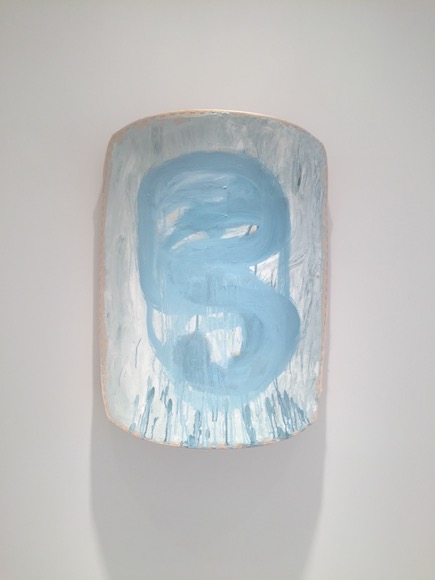
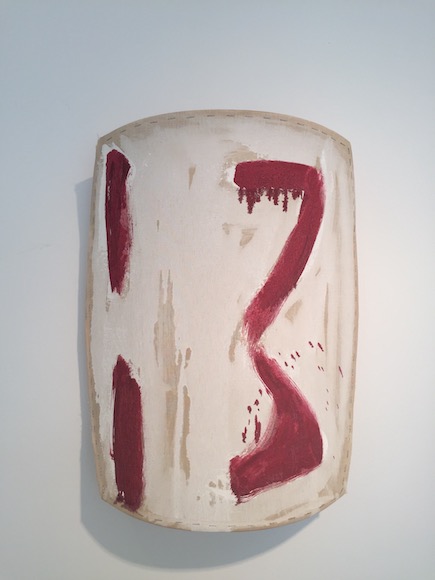
RON GORCHOV

Oil on linen
23 x 30 x 7 in. (58 x 76 x 118 cm)

Oil on linen
20 x 25.5 x 5.8 in (51 x 65 x 15 cm)
Categories: artists