INDETERMINACY

John Cage: Works on Paper

March 3 – April 22, 2026

WATCH THE VIDEOS

JENNIFER BAAHNG is pleased to present INDETERMINACY, an exhibition featuring a carefully curated selection of John Cage’s most influential works on paper. The exhibition examines Cage’s deliberate, neutral approach to removing personal bias from the creative process. The concept of silence, embodied in INDETERMINACY, is conveyed through visual representations that reflect Cage’s broad philosophical views.

John Cage’s engagement with Gertrude Stein’s work spanned his entire career, beginning with his early musical settings of her poems in the 1930s and evolving into a philosophical connection to her ‘landscape’ approach to language. He believed that meaning was flexible, often using words beyond their usual senses. This perspective created a surface of sound and text characterized by a non-hierarchical structure. Immediate perception, similar to Stein’s ‘continuous present,’ aimed to immerse the audience in the world as it is, removing symbolic baggage from art.

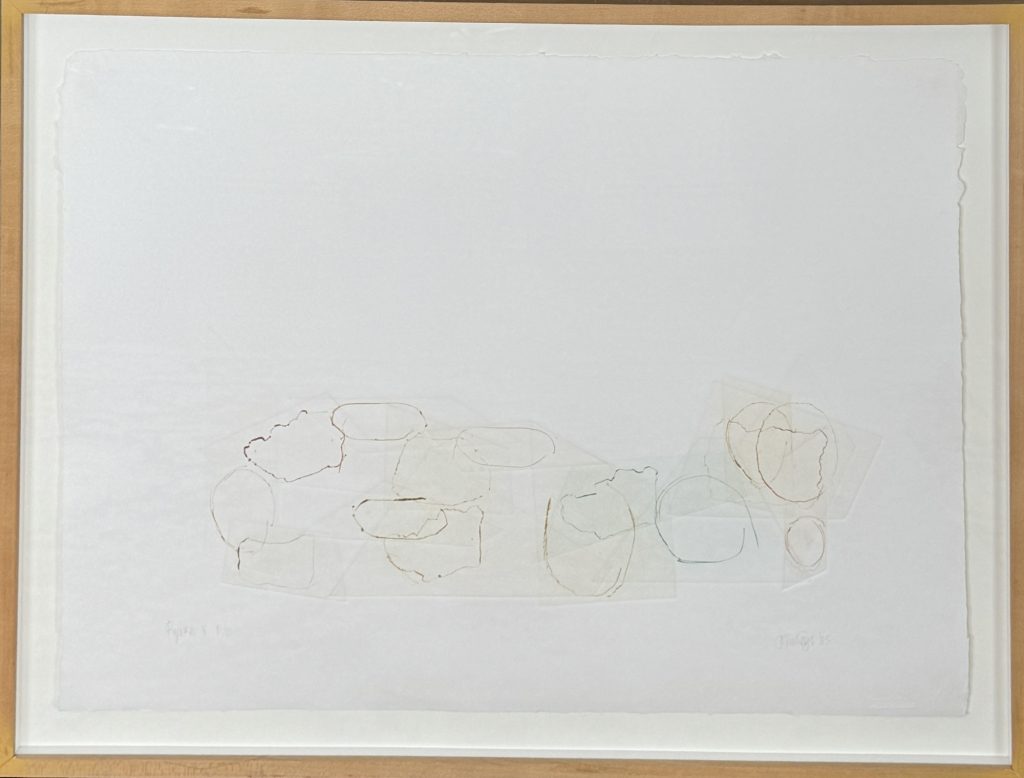
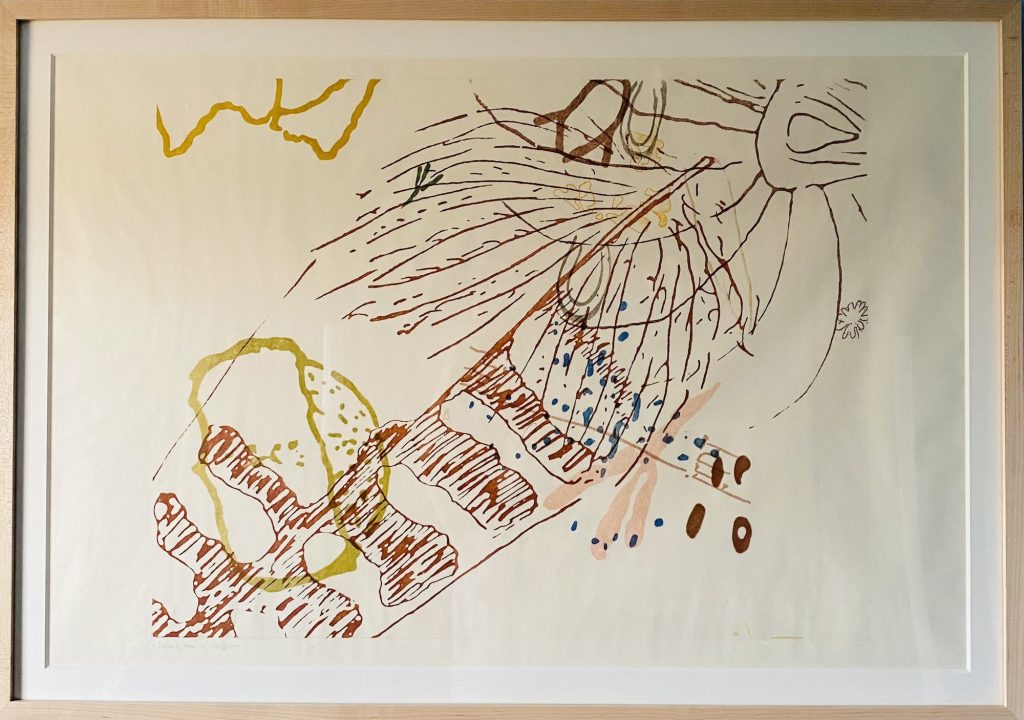
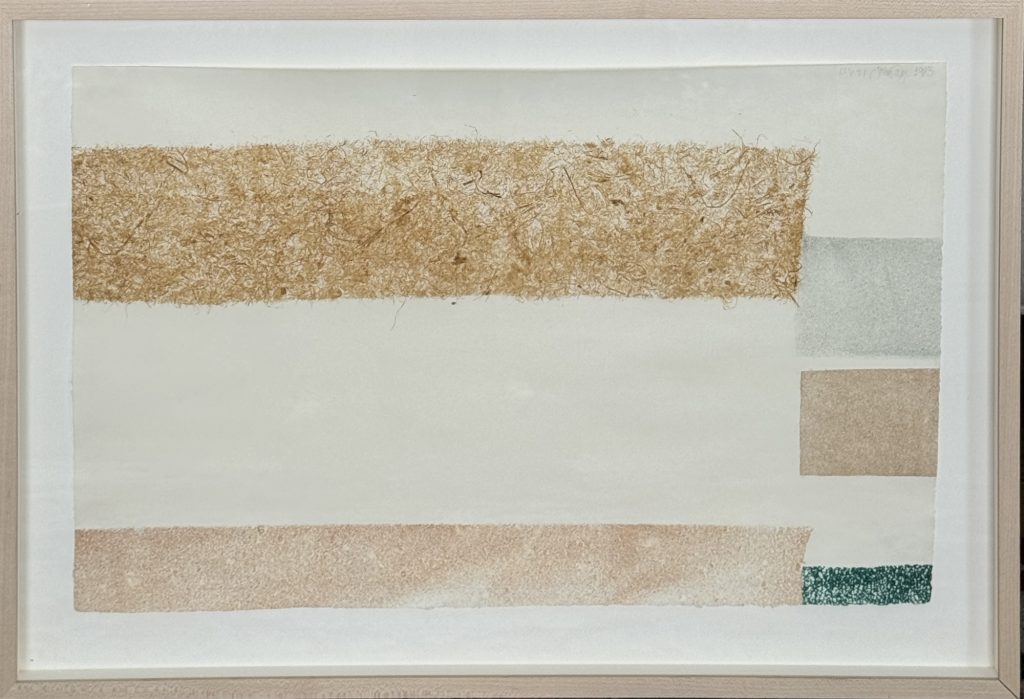
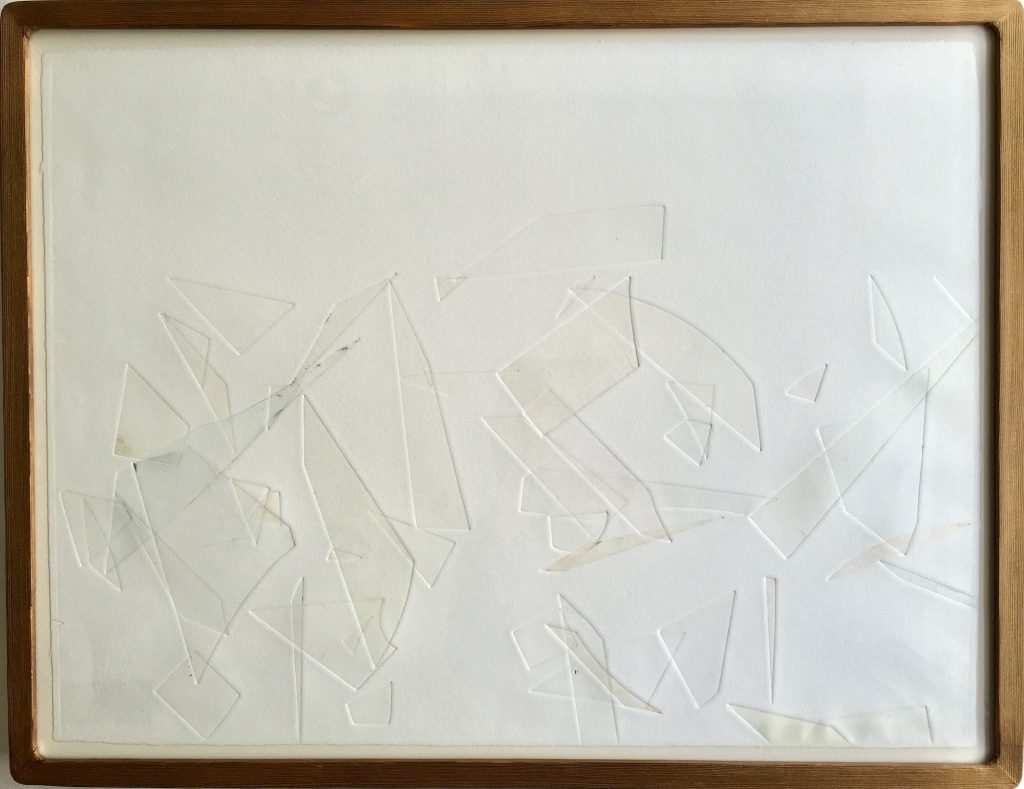
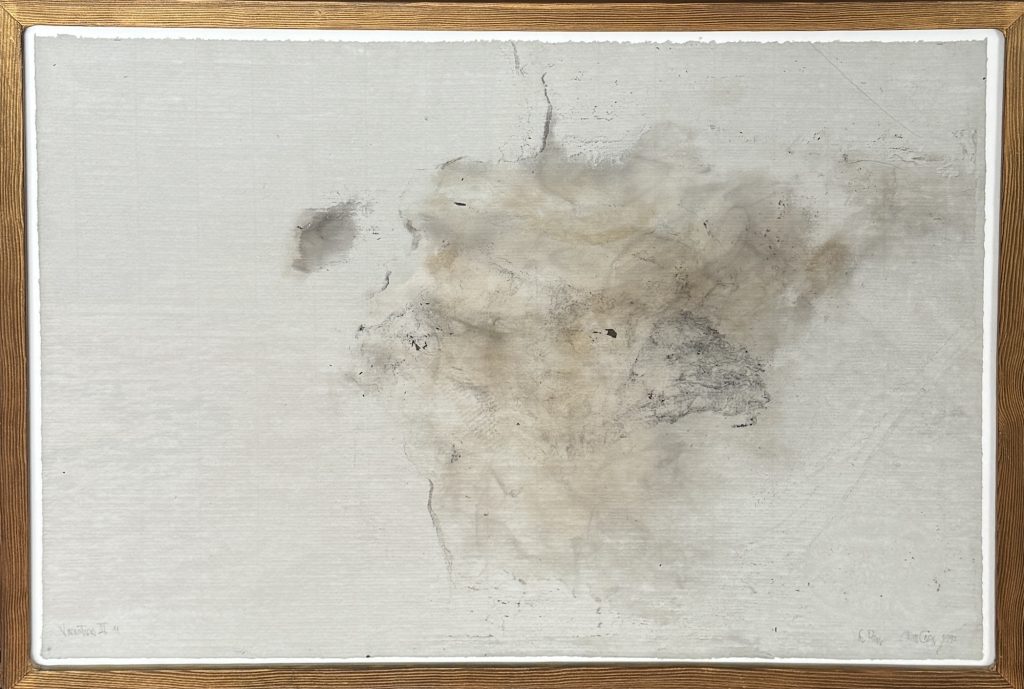
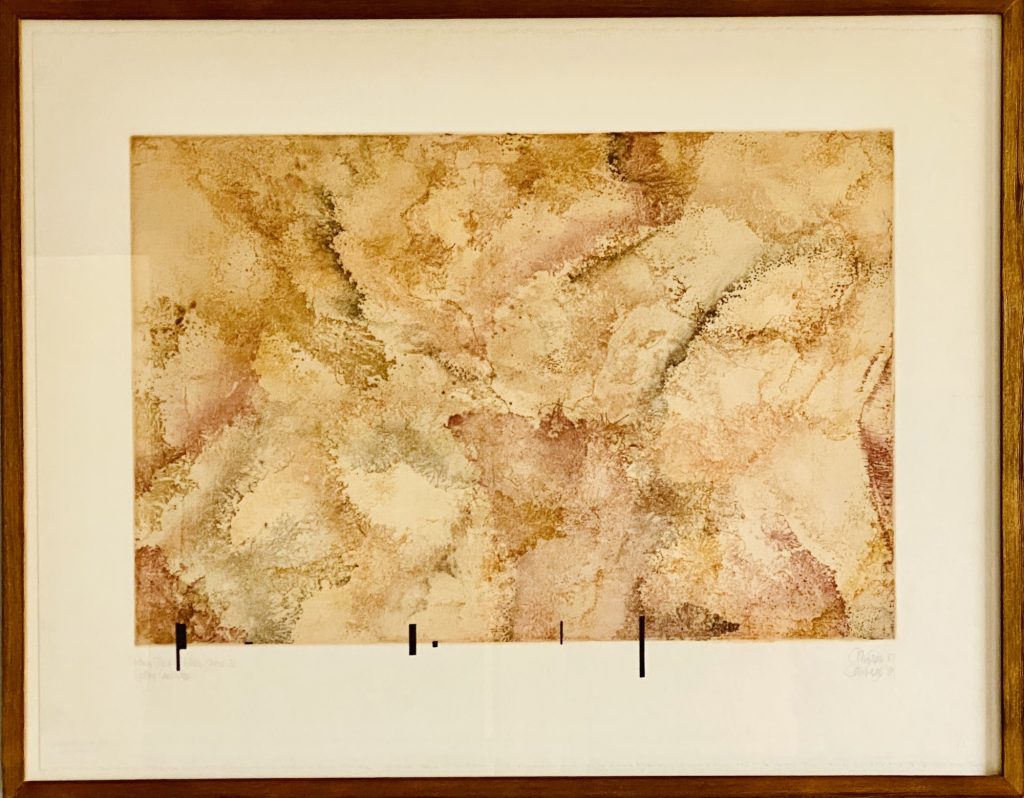
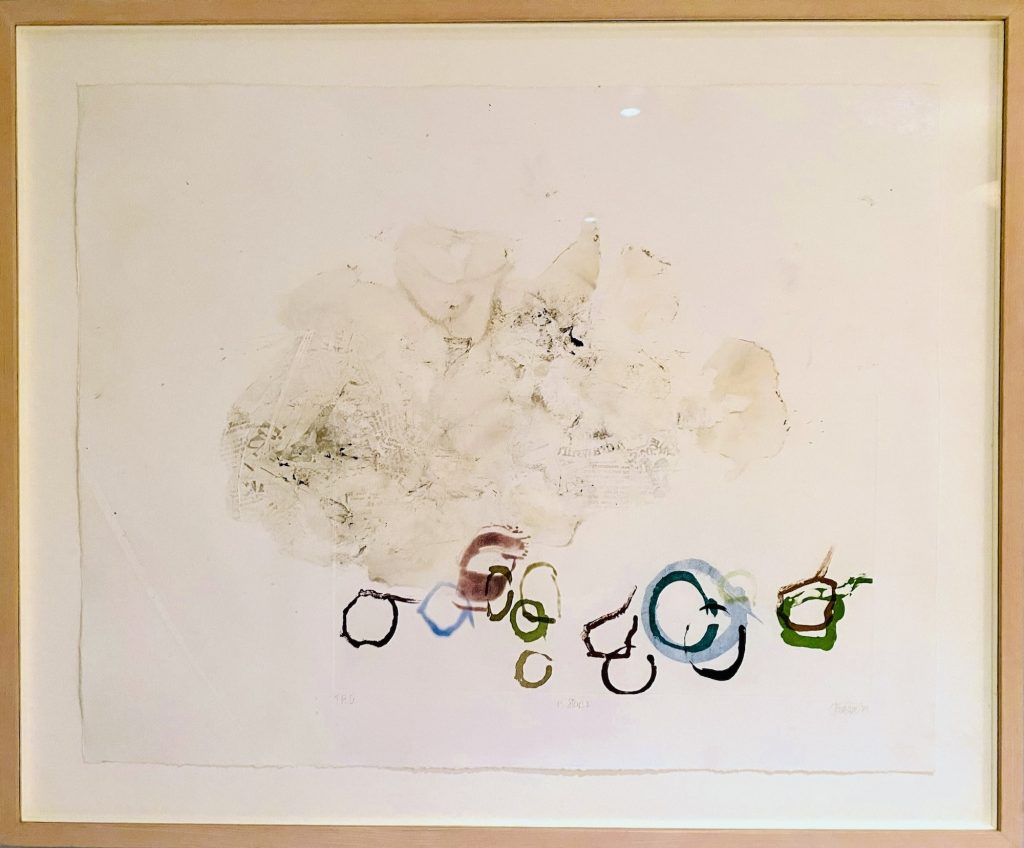
John Cage used the I Ching to determine the sequence of plates, ink colors, and placement, freeing the artist’s imagination. The tension between effort and randomness remains evident throughout his work. “Changes and Disappearances No. 21” (1980), which required hundreds of iterations, and “Where There Is Where There Is – Urban Landscape No. 31” (1987, 1989), establish a visual language reflecting Cage’s interest in Stein’s writings, creating a surface with fluid and undecided meaning. “11 Stones 2” (1989) and “On the Surface” (1980-1982) highlight Cage’s collaboration with natural elements. “HV #21” (1983) explores a landscape of chance, delving into the horizon of indeterminacy. Using smoke and fire during the paper preparation in “Variations III No. 11” (1992), Cage allows the environment to influence the printmaking process. The resulting images serve as atmospheric echoes of the I Ching process, not depicting stones but traces of a performance involving a stone, a flame, and a piece of paper.

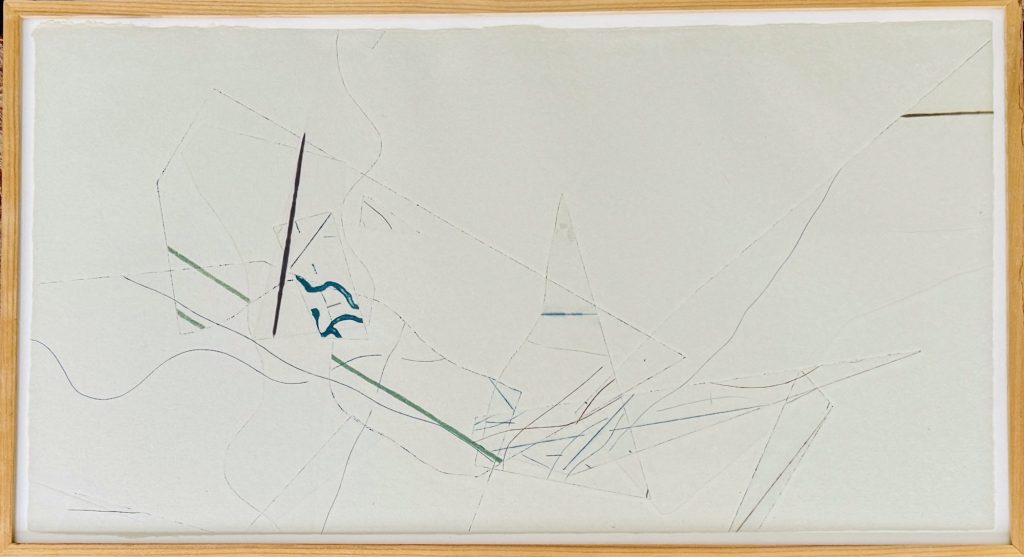
The entire series of the thirteen “Ryoku” suite (1985) illustrates Cage’s shift from traditional composition to a method centered on disciplined randomness. These works highlight a unique variation in the process, focusing on the detailed complexity of drypoint marks and showcasing a precise, systematic approach. Using the I Ching, Cage created a visual environment where marks do not simply express emotion; instead, they occupy space in a neutral, objective way.

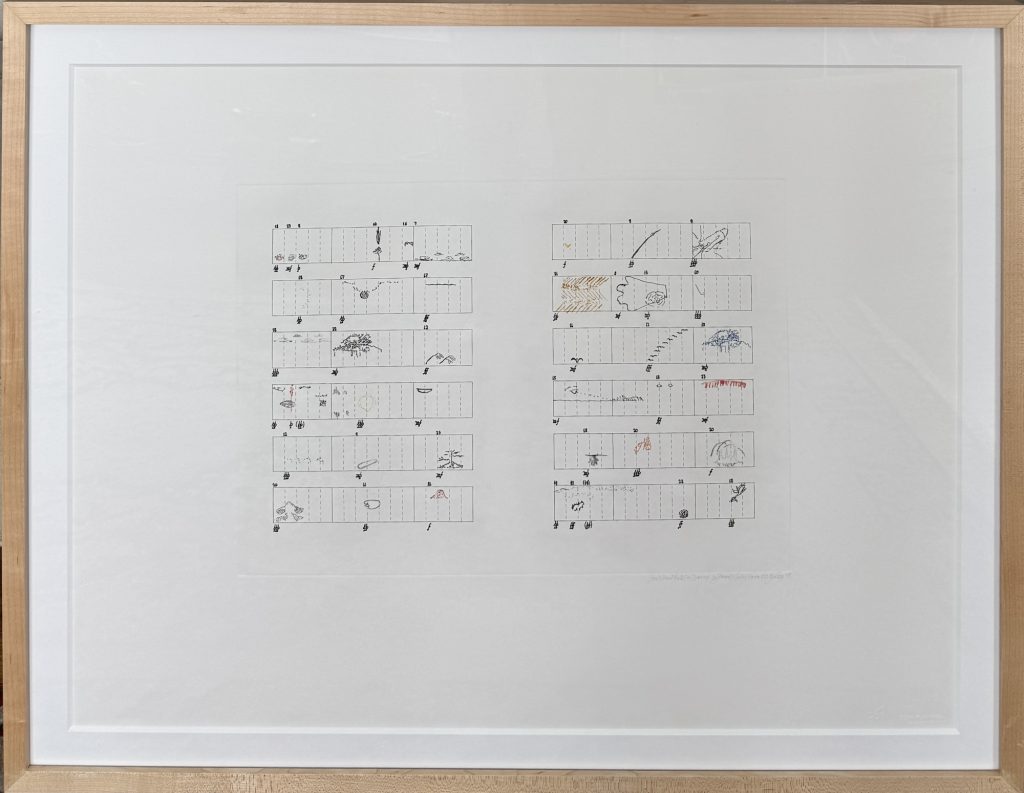
While John Cage used the term to describe his 1959 collection of 90 stories, INDETERMINACY is a fundamental element of his visual art practice. Cage’s works on paper serve as musical scores with graphic notation. These scores are indeterminate in performance and open to multiple interpretations. In this exhibition, chance refers to the random methods used in composition, while indeterminacy signifies the open-ended nature of the final work. By removing the self from the center of the artwork, John Cage invites us to see the paper as a window into a constantly changing yet still present world. INDETERMINACY aligns closely with his intention, as the works rely on chance to shape their unconstrained final form.

ARTIST

John Cage

Categories: exhibitions

Tags: