Korean Contemporary Art
POISE AND PUNCHLINE
September 11 – November 7, 2026
Venice, Italy
Poise and Punchline presents a polyphonic exploration of contemporary Korean aesthetics through seven distinct artistic voices, each a master of their own narrative. Curated by Dr. Jennifer Baahng, the exhibition responds to the 61st La Biennale di Venezia’s overarching theme, In Minor Keys, by examining the interplay between Gyeok-jo (dignified restraint) and Hae-hak (subversive wit). It explores the “K-Core”—a deep-rooted philosophical foundation of Korean art, the resilient, lower-frequency philosophies that underpin Korean creative persistence. The featured artists, working across sculpture, installation, and painting, demonstrate that humor and refinement are not opposites but unified tools for social critique and emotional resonance. These seven South Korean artists maintain a sovereign poise while delivering punchlines that pose a vital challenge and contribute to the discourse of global contemporary art.
ARTISTS
Hank Kim
Jean Jinho Kim
Stephanie Kim
Bone Koo
Meera Lee
Jaye Moon
Special presentation by Joshua Lantern
WATCH THE VIDEOS

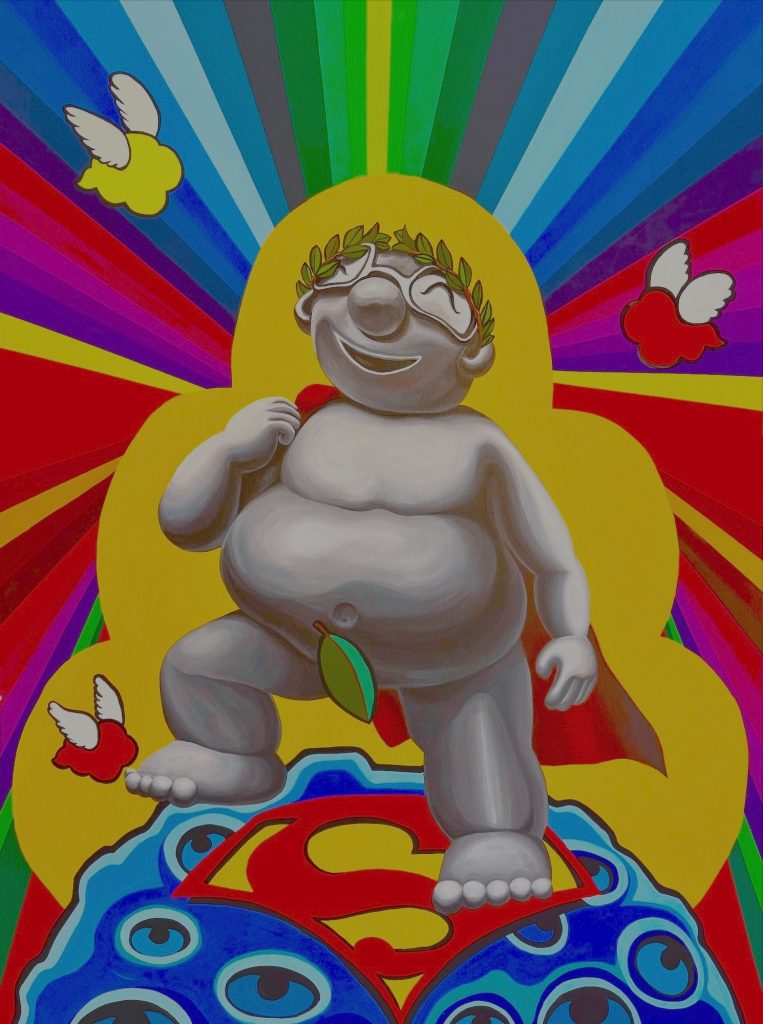
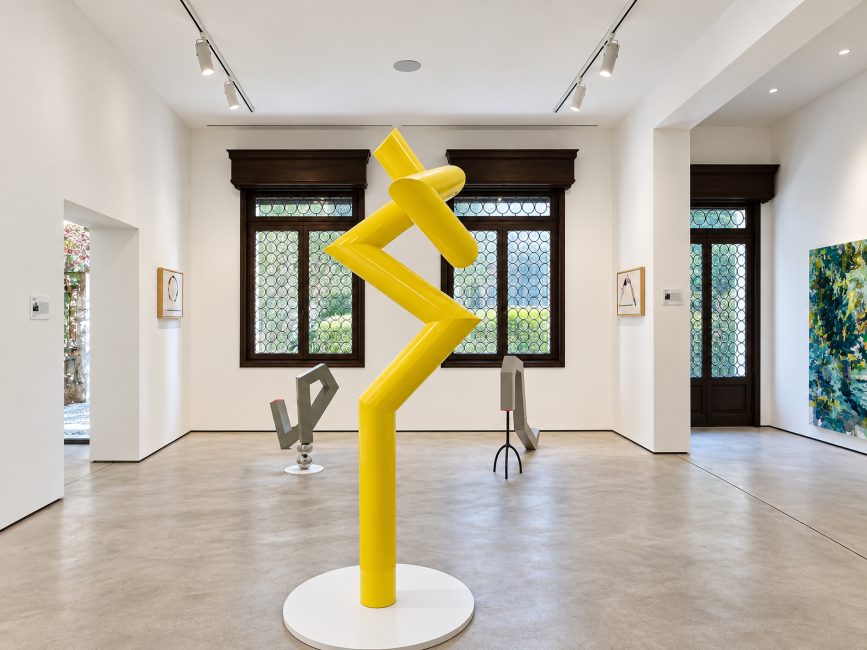
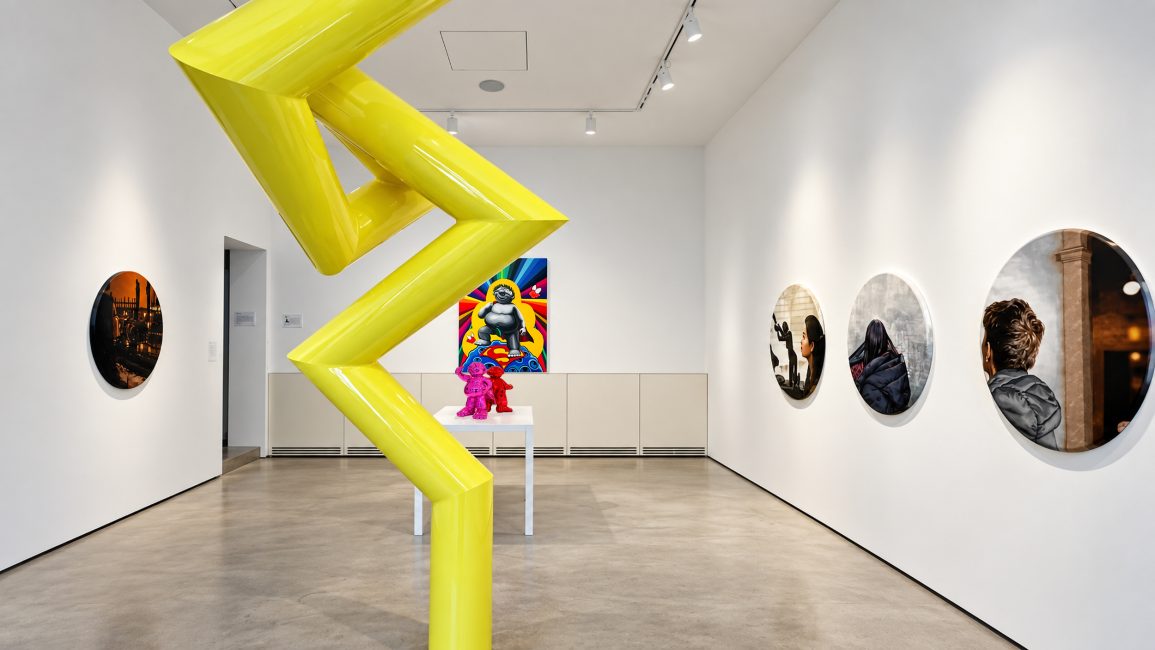
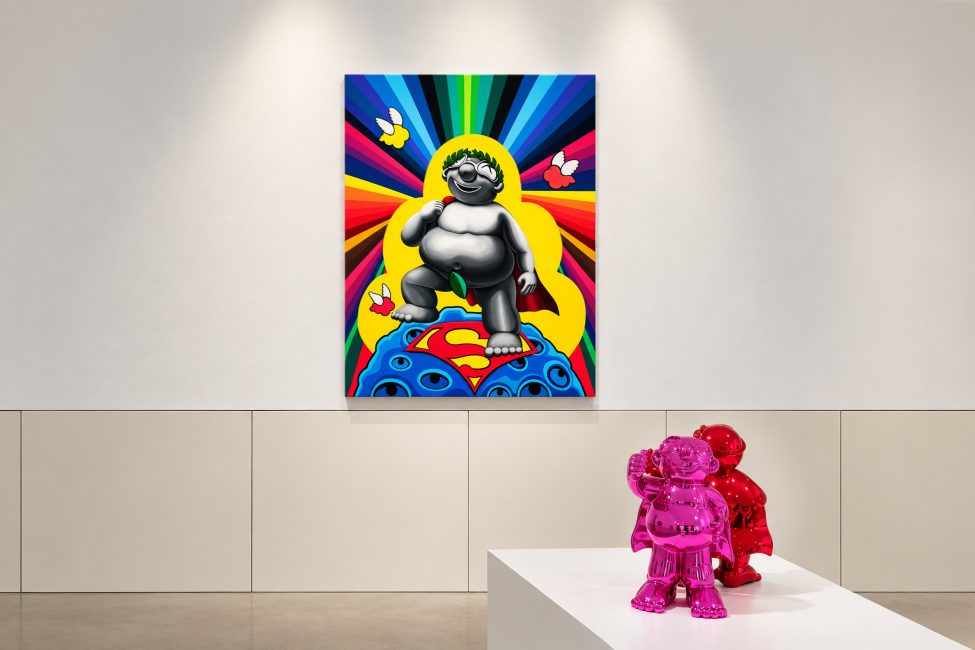
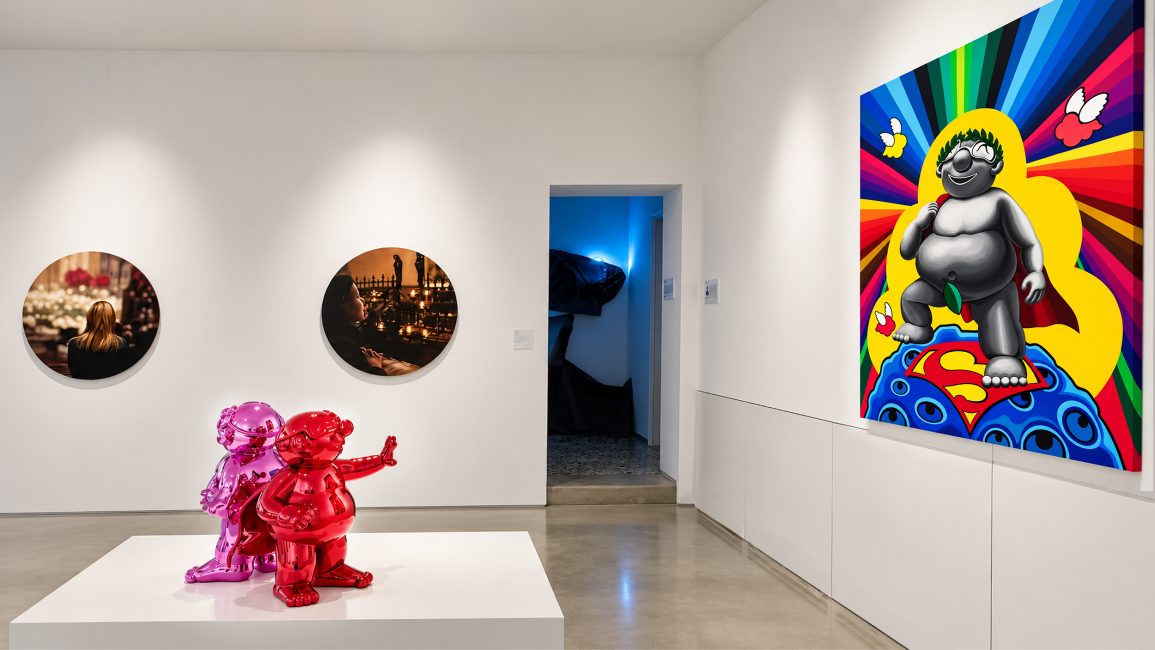
Hank Kim (b. 1972)’s art is rooted in “Everyday Life Aesthetics,” drawing on vernacular histories and blending personal perspectives. Super Babies are on view, configured in bold proportions with sharply defined silhouettes. The aesthetic employs a minimal vocabulary to explore symbols of power. Through solid forms rendered in vibrant colors on sleek, durable surfaces, Kim distills ideas and references into basic forms. Whimsical and highly sculptural, these animated cels become relics of moments such as a single flight or eventual arrival. Minwha is a Korean folk art genre from the late Joseon Dynasty that subtly mocks the rigid aristocracy through lively colors and humor. Kim grafts these traditional Korean Pop Art motifs into modern sculpture—honest depictions of daily life and a desire to transcend reality as a superman. This anti-hero manifests his journey as an immigrant, family man, and artist. Kim’s work is built on memories of Danchung and the Obangsaek—the Korean five-color scheme. It represents a collective desire for cosmic harmony, stability, and peace, incorporating Western art influences and American Pop Art. It also reflects his embrace of life’s mud, a Japanese notion of wabi-sabi—finding beauty in imperfection—and Nietzsche’s Übermensch, which seeks self-mastery and dominance. While Kim’s approach champions life’s humble beauty, it ultimately points to hope and positivity. David Super Baby echoes in its vividness and flatness an arc toward a contemporary aesthetic. Hank Kim has held numerous solo exhibitions and has participated in over 300 group exhibitions. He earned a BFA in painting from Suwon University, an MFA in painting from Sungshin University, and an MFA in sculpture from Lehman College, CUNY. He lives and works in New Jersey.
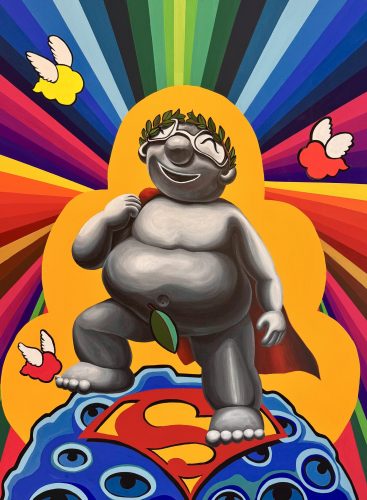
Hank Kim (b. 1972)’s art is rooted in “Everyday Life Aesthetics,” drawing on vernacular histories and blending personal perspectives. Super Babies are on view, configured in bold proportions with sharply defined silhouettes. The aesthetic employs a minimal vocabulary to explore symbols of power. Through solid forms rendered in vibrant colors on sleek, durable surfaces, Kim distills ideas and references into basic forms. Whimsical and highly sculptural, these animated cels become relics of moments such as a single flight or eventual arrival. Minwha is a Korean folk art genre from the late Joseon Dynasty that subtly mocks the rigid aristocracy through lively colors and humor. Kim grafts these traditional Korean Pop Art motifs into modern sculpture—honest depictions of daily life and a desire to transcend reality as a superman. This anti-hero manifests his journey as an immigrant, family man, and artist. Kim’s work is built on memories of Danchung and the Obangsaek—the Korean five-color scheme. It represents a collective desire for cosmic harmony, stability, and peace, incorporating Western art influences and American Pop Art. It also reflects his embrace of life’s mud, a Japanese notion of wabi-sabi—finding beauty in imperfection—and Nietzsche’s Übermensch, which seeks self-mastery and dominance. While Kim’s approach champions life’s humble beauty, it ultimately points to hope and positivity. David Super Baby echoes in its vividness and flatness an arc toward a contemporary aesthetic. Hank Kim has held numerous solo exhibitions and has participated in over 300 group exhibitions. He earned a BFA in painting from Suwon University, an MFA in painting from Sungshin University, and an MFA in sculpture from Lehman College, CUNY. He lives and works in New Jersey.
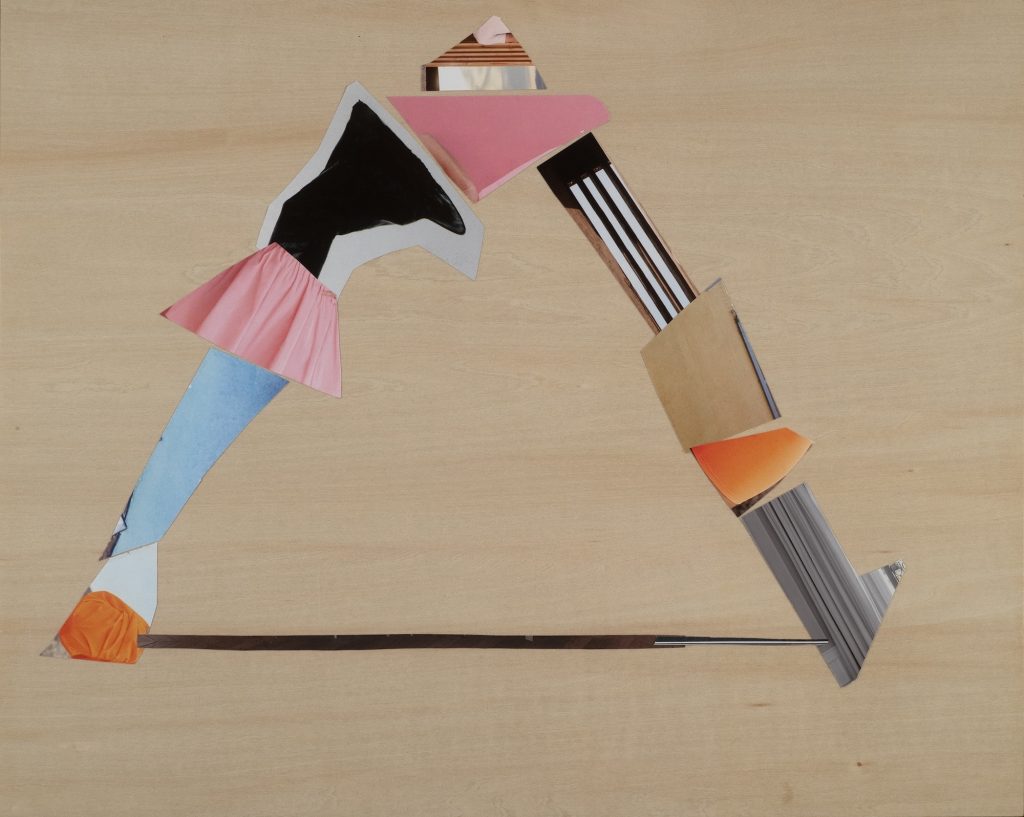
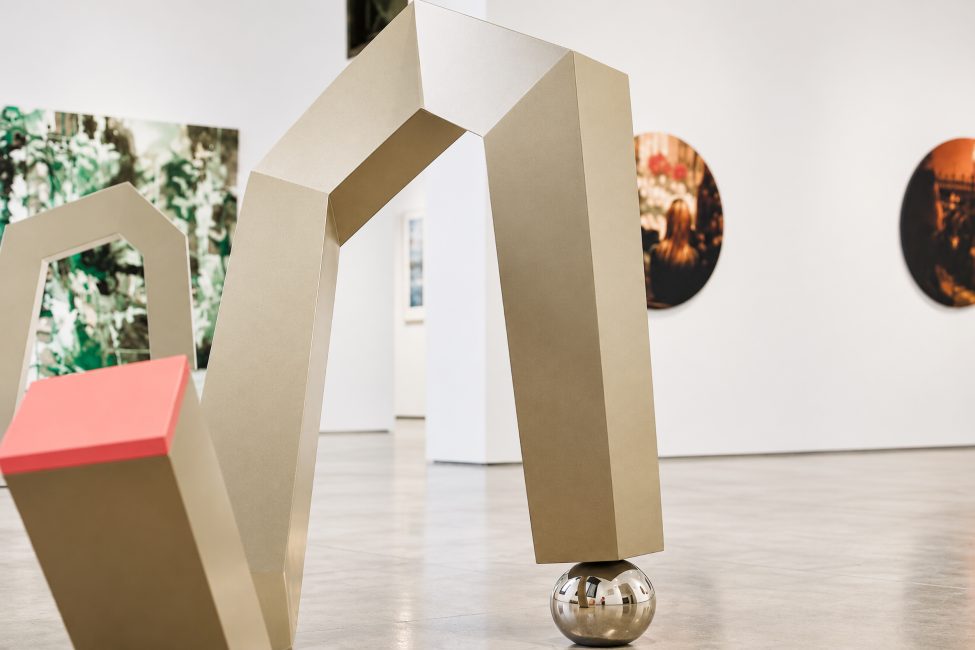
Jean Jinho Kim (b. 1956) investigates formal abstraction through diverse works, from inventive collages to large steel structures. Her themes of transformation and empowerment are expressed through metal bending and minimal abstraction, continually refined for greater directness and impact. Shall We ? examines perception, exploring surface, color, scale, and space, and creates a complex interplay of time and space that draws viewers into moments of heightened imagination. These sculptures draw in the air— fluid, elegant, and monumental. They showcase precise geometry balanced with essential sculptural intensity. Recurring themes of fragmentation and flow lend her architectural forms a playful quality. Her collages, Hold My Hand, The Open Circle, and Powerhouse, are constructed from layered, malleable materials, with subtle references to their inherent qualities, balancing poise and wit. Her attention to material, composition, and emotional depth invites the viewer into a calm yet expressive space, a disciplined creative spirit. Culminating in a humanistic space, her art equilibrates control and collapse, restrained yet passionate, and emphasizes spatial texture with noble sensitivity. Kim’s art contemplates the next frontier: understanding time, space, and the human psyche. Jean Jinho Kim holds a BFA in painting from West Virginia University and an MFA in Studio Art from American University. Her institutional exhibitions include the Incheon Open Port Museum, the Katzen Museum, the Gilchrist Museum of the Arts, the Kreeger Museum, the Korean General Consulate, and the Phillips Collection in Washington, D.C. She lives and works in Washington, D.C.
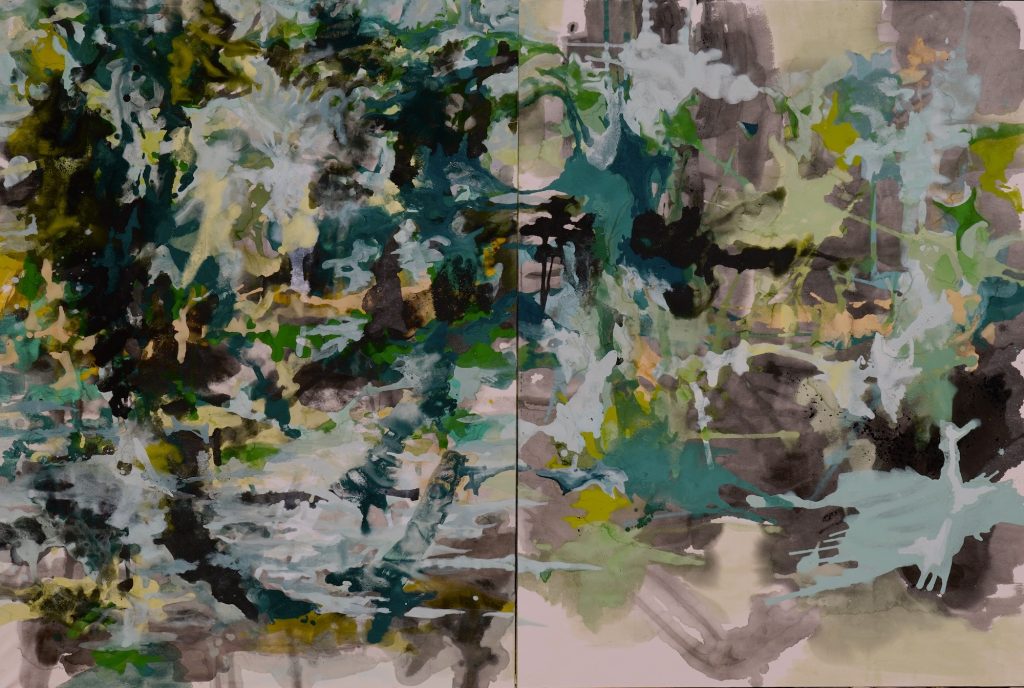
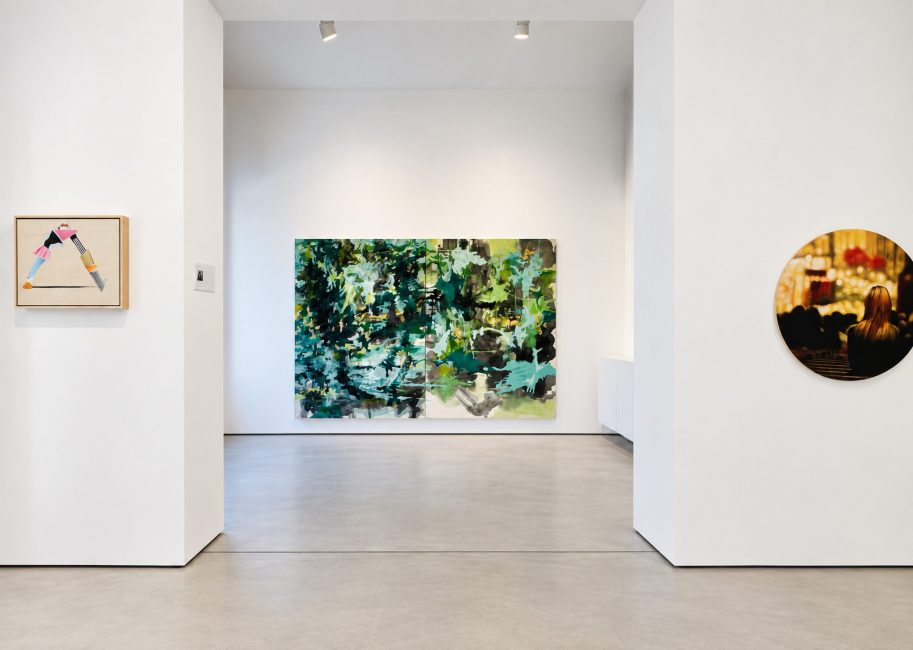
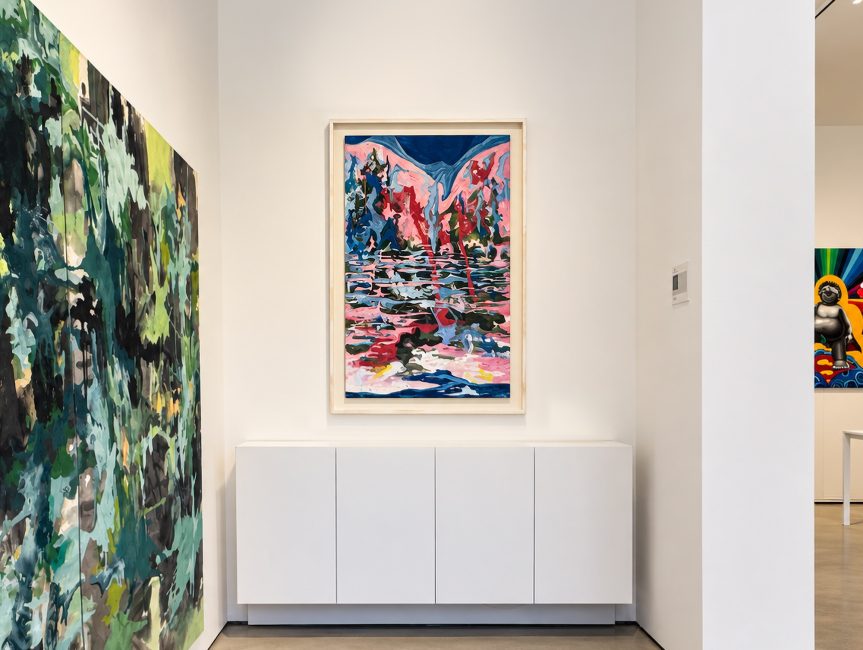
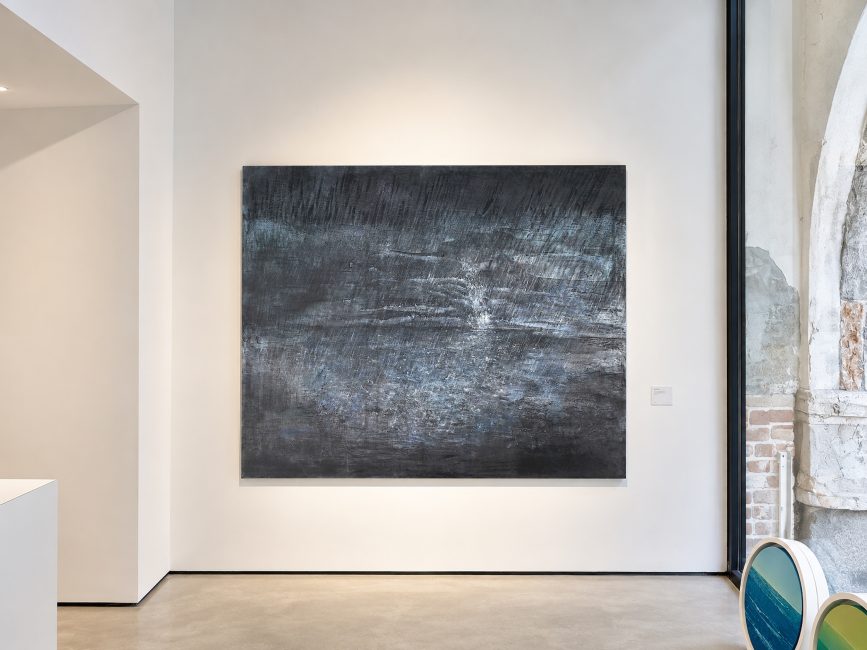
Stephanie Kim (b. 1971) draws poetic connections among memory, nature, and identity. With erotic nuances in entangled creatures, she creates breathtaking abstract paintings, especially landscapes mirrored in water. True nature reveals a different realm—an unstable blend of light and motion. With gradations of ink and the tactile vulnerability of Hanji, Korean mulberry tree paper, she traces the fleeting moments in life, which are in continual flux. In Resonance, expressive color markings invite us to step beyond the shore’s sly allusions and immerse ourselves in a nature distilled to its essence. She hopes viewers will reconnect with a version of themselves that is both whole and healed. Kim’s art is an immersive poem that processes emotional intensity. It builds complex surfaces using Meok, traditional East Asian ink, and Bunchae, powdered pigments. Fragments, transience, rich textures, and deep shadows in semi-monochromatic palettes highlight her primal instinct as an artist. Ostensibly, her work is splendid in form—color is the brick and mortar of a dementedly joyous transformation. Patterns repeat in the space, and massive abstract markings are filled with shifting, puzzle-like shapes and lines. Kim’s ultimate muse is the exploration of light, reflection, and shifting atmospheric conditions. Her markings serve as the structural building blocks of abstract compositions. With early art training at Sunhwa Arts Middle and High School, Stephanie Kim earned both a BFA and an MFA in Oriental Painting from Ewha Womans University. After earning a Digital Design Certificate from the Art Institute of Pittsburgh in the U.S., she has exhibited in New York, Dallas, Miami, and Seoul. She lives and works in New Jersey.
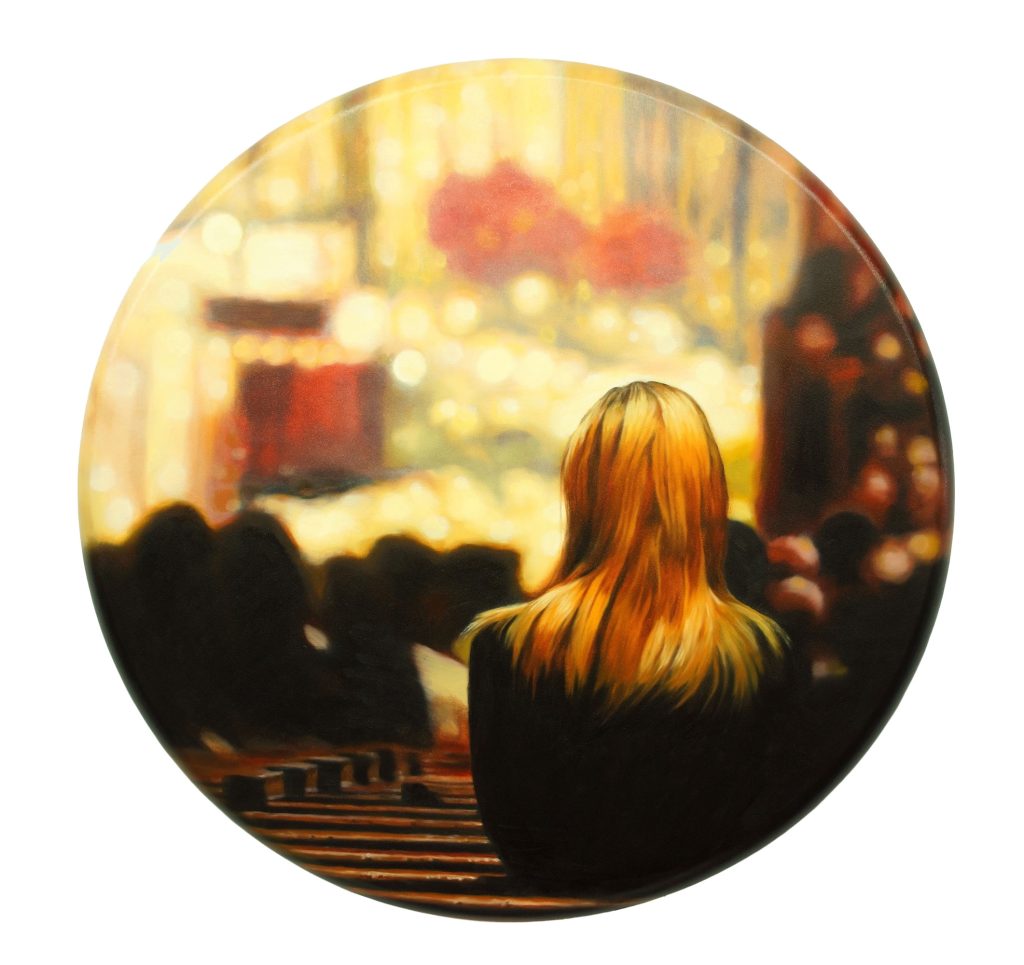
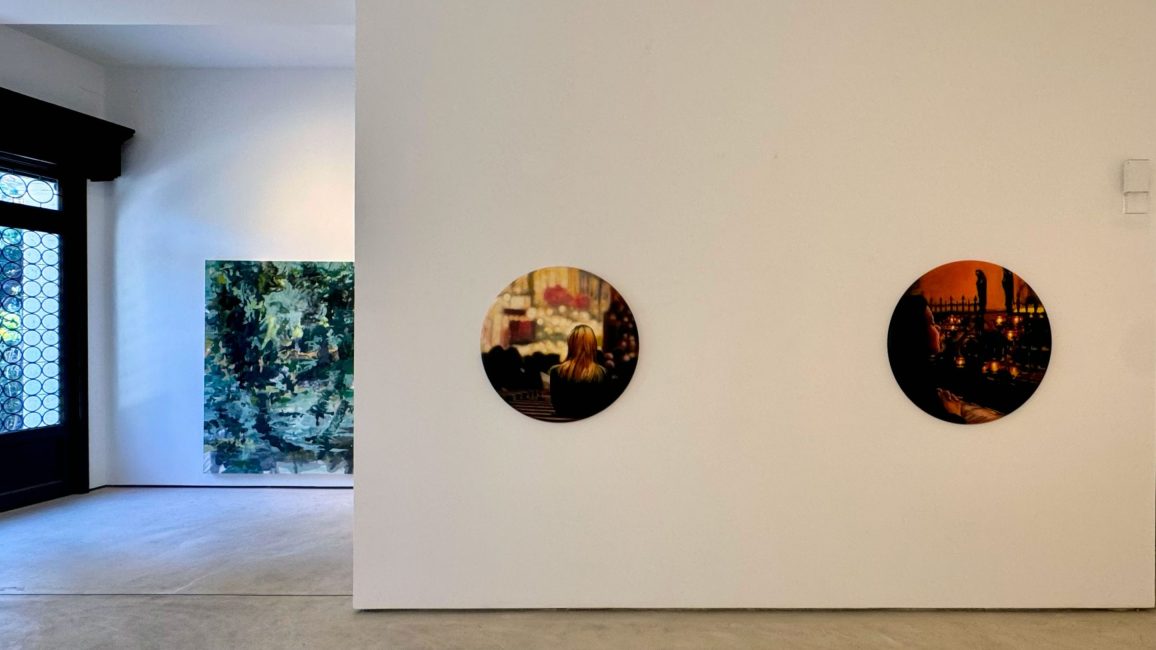
Bone Koo (b.1973)’s art is a self-help monologue. It is a devotional narrative that reconstructs states of heightened awareness. Alluding to the spatial clarity of Renaissance paintings, Koo’s paintings have surfaces disrupted by blurring, diffusion, and painterly instability. It is a supreme poetry, with its melancholy, splendor, and celestial sound. The five atmospheric oil tondo paintings, Benedictions, are mind-scapes. They strip away the layers of a persona to reach the spirit of the painting: an ultimately divine moment felt by the subject in the picture, by the maker Koo himself, and by the viewer. Koo’s paintings blend realism with the conceptual freedom of surrealism— flawless detail is rendered with extreme, photographic accuracy, while subtle foreshortening in light, scale, or object combinations defies reality. Benedictions emerge through cinematic mood in scenes that often feel overly sterile, eerie, or dreamlike, prompting the viewer to question what is real. They chronicle the human condition, conveying a specific, intimate sensation of being alone. A nod to Vermeer and Rembrandt, Koo frames his paintings in psychological realism. He encourages viewers to slow down and arrive at a state of being present—a slower pace yields a more intuitive experience of the pictorial intelligence. Koo paints from the photographs he takes of live subjects. He then deliberately blurs the boundary between realism and abstraction across the pictorial plane. The intent is to depict the ineffable: His work becomes a myth, indecipherable. Bone Koo earned a B.F.A. from Hongik University and a Master of Divinity from Drew Theological School. He runs an art academy that fosters early artistic skills. He lives and works in New Jersey.
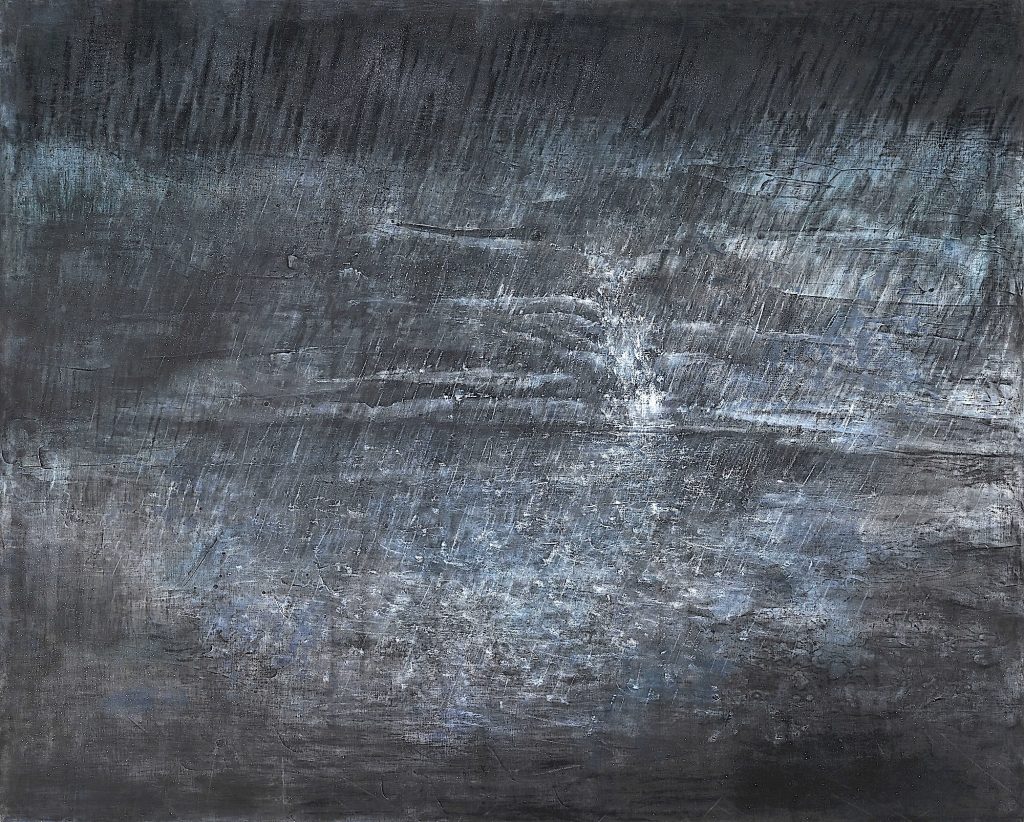
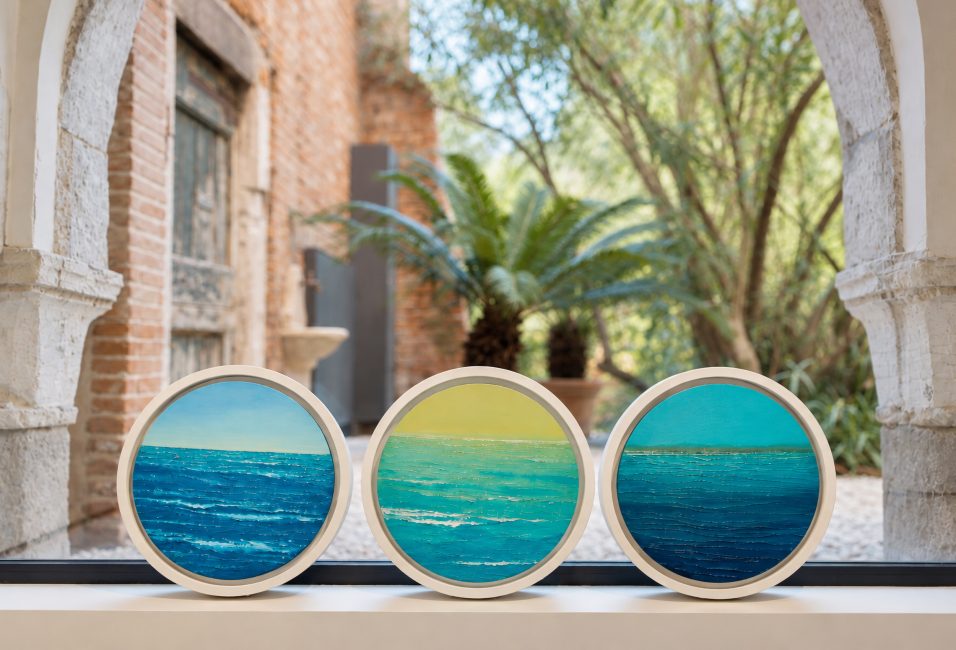
Meera Lee (b. 1962) captures the rapture she feels when she paints, a confessional. Her works depict frolics that reach uninhibited joy and lighthearted celebration. She has long used dynamic techniques to translate this energetic spirit onto canvas. She floods these scenes with warm, vibrant sunlight or night-hour glows to amplify the uplifting emotional tone. The Cruise paintings are seascapes that offer intimate, private moments, peering into the vastness through a vernacular lens. These brief scenes allow us to experience fleeting beauty and impermanence. They may seem random, but they are deliberate: the tunnel walk, a mainstay of Lee’s art. At Dawn simmers across undulating sea terrain, calling out to the introspective. It is a blossoming spiritual landscape. Still yet choppy, it has a visceral appeal for cinephiles, as if it has a story to tell. The Coast, a mind-scape of light and color, is an archetypal Impressionistic painting—rapid, unposed movement rendered in loose, energetic brushstrokes. Her main media attest to this: pastel, charcoal, Seokchae, mineral pigments, Dak-ji, Korean mulberry paper, acrylic paint, tissue paper, paper string, a glue gun, and a sponge. The work becomes a lyrical poem that is not merely terrain but an infinite source of inspiration, constantly reinterpreted through the viewer’s gaze and inner self. Evoking divinity and infinity, her work humbles us and embraces us. Meera Lee earned a BFA and an MFA and exhibited at Gyeomjae Jeongseon Art Museum, Yesong Art Museum, SAGA Prefectural Museum of Art, Maru Art Center, Yeouido National Assembly Gallery, and Tokyo Metropolitan Art Museum Exhibition. Meera Lee lives and works in Seoul.
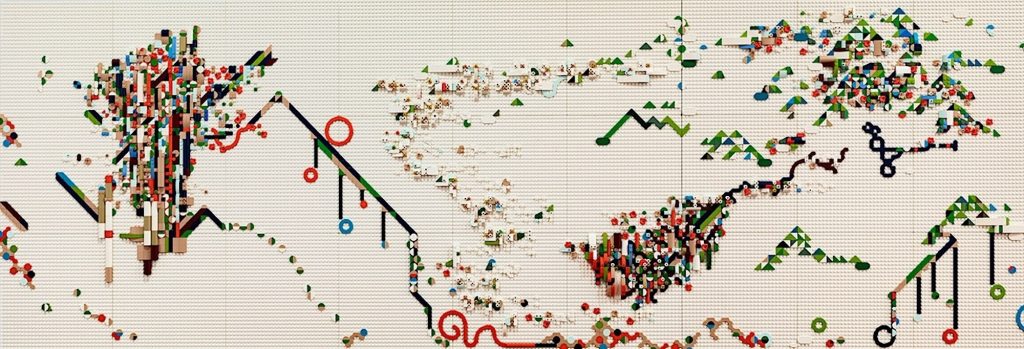
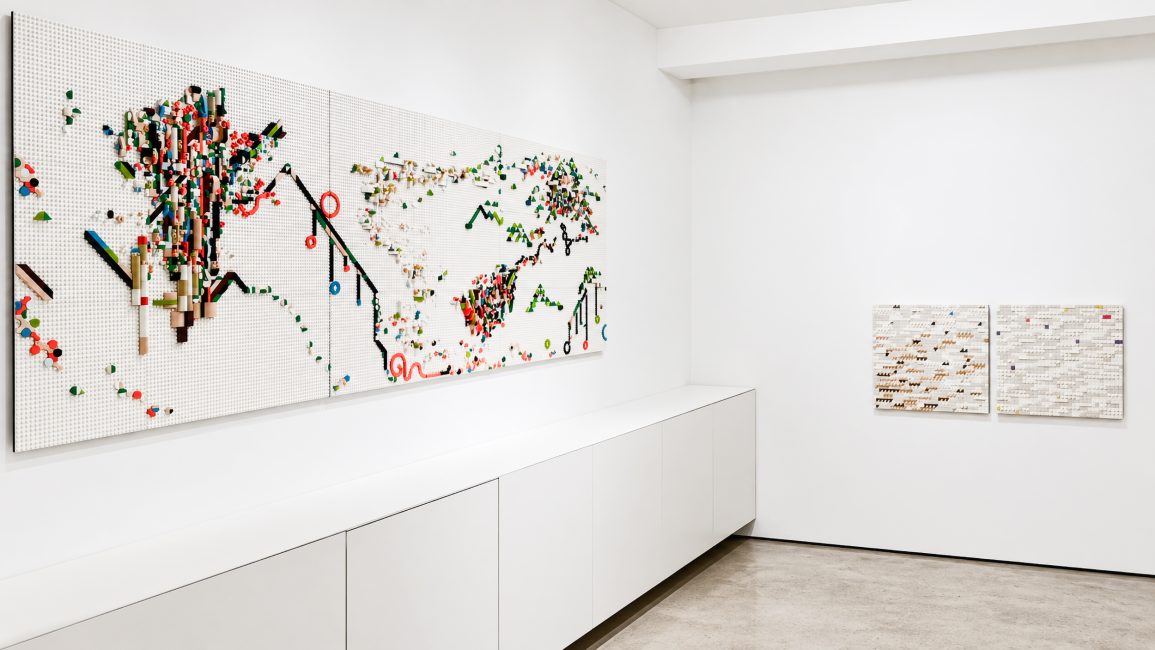
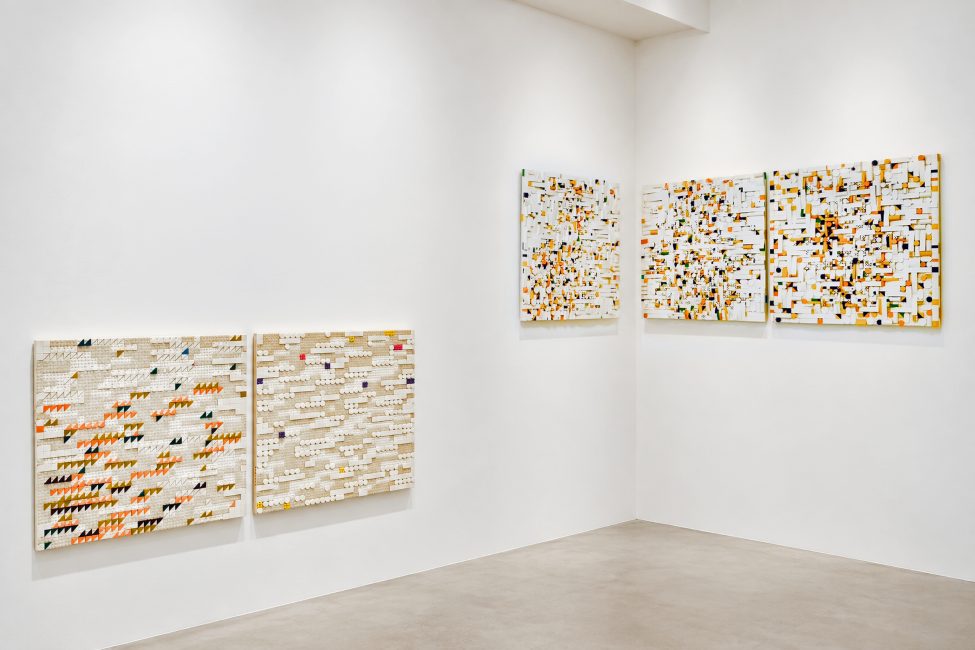
Jaye Moon (b. 1963) crafts interactive Braille paintings with LEGO bricks. Her paintings demonstrate an innovative approach to accessible art, emphasizing inclusivity and tactile engagement. An abstract painting, it is for all viewers, whether or not they can decipher Braille. Dorihwaga (Song of the Peach and Plum Blossoms) is a Pansori, Korea’s traditional genre of musical storytelling. As an oral tradition, Pansori was documented by Shin Jae-hyo, a 19th-century Korean composer, transforming ephemeral performance into a written archive. These efforts ensured the survival of a living art form while preserving its cultural memory. Equally significant was his support of Jin Chae-seon, which expanded possibilities for women Pansori singers. Visual and tactile elements transform Dorihwaga into an abstract sensory experience, allowing sound, language, and memory to be encountered through both vision and touch—a tactile Braille painting echoes the performance’s expressive cadence. Before Rain is an excerpt transcribed from the classic 1952 short story “Rain Shower” by Hwang Sun-won. Presented as a non-tactile Braille painting, here Braille becomes an abstract visual system: translated into numbers, then transformed into geometric forms, color, and rhythm. Restrained compositions reflect the stillness before the rain, manifesting a moment’s fragile beauty. History resonates deeply with Moon’s artistic practice. Tactile or non-tactile surfaces preserve memory, knowledge, and cultural expression, allowing them to be reimagined. Moon’s extensive museum exhibitions include the Brooklyn Museum, the Queens Museum, the Nam June Paik Art Center, the National Museum of Modern and Contemporary Art of Korea, and the Gyeonggi Museum of Modern Art in Korea, as well as solos in Brussels, London, Madrid, Mexico City, Miami, New York, Seoul, and Tokyo. Her work has been reviewed in Art in America, Artforum, Artnet, Time Out, and Newsweek Magazine. Her Braille work was featured in the Korean middle school art textbook. A recipient of the Pollock-Krasner Foundation Grant and holder of an MFA in Sculpture from Pratt Institute, Jaye Moon was the 2025 Hall of Fame inductee of the New York Foundation of Art. Lives and works in New York.
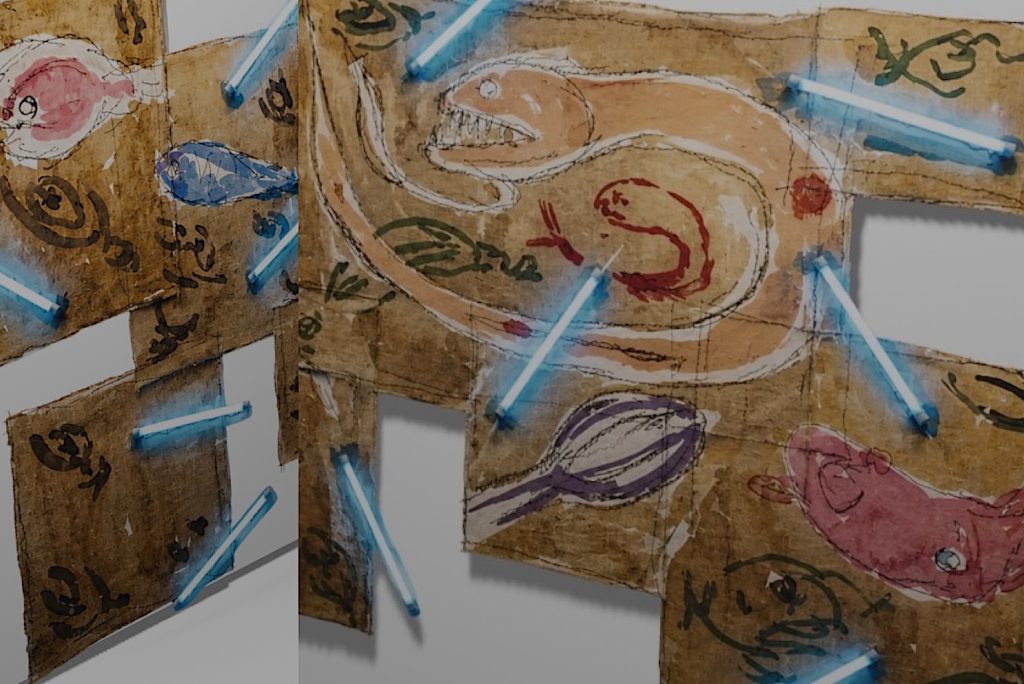
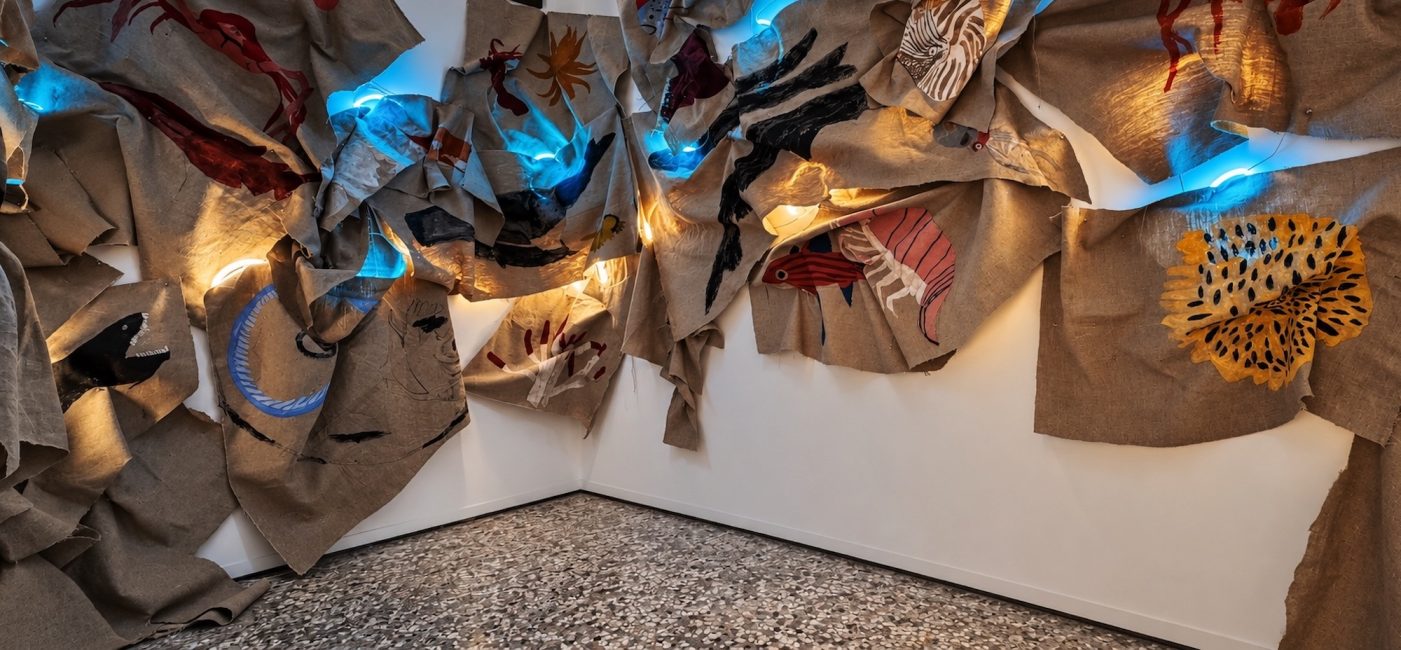
Joshua Lantern (b. 2009) depicts deep-sea creatures—marine animals that have evolved to survive the extreme conditions of the ocean’s midnight and abyssal zones. Operating under crushing pressure, near-freezing temperatures, and perpetual darkness, these animals have developed unique biological structures and visual adaptations to navigate their extreme habitat—bioluminescence turns the deep sea into a constellation of living signals. Faint flashes and subtle emissions become the language for communication, disguise, and survival. The Abyss is a room installation by Joshua Lantern, a Korean-descent artist and the exhibition’s youngest participant. It portrays the secret, luminous world of deep-sea creatures through drawings, collages, and LED lights. The installation is a poetic metaphor for perception, adaptation, and the inner world. It is a dreamscape with a low-frequency sense; these deep-sea ecosystems operate outside the realm of everyday visibility, recognizing one another through signals and rhythms that are rarely detected. It conjures a darkness that is not empty but another ecosystem full of subtle light. These biological strategies are expanded into metaphors of human existence. At a moment when our social and ecological crises are also crises of awareness and imagination, Joshua offers a speculative visual language that approximates the world’s complexity and provokes conversation about eco-politics and eco-culture. Elegant and cruel, this immersive installation places viewers in vignettes of rising global sea levels, the climate crisis, and endangered species; it interrogates reality and inspires humans. The Abyss brings a soft touch to the discourse on environmental justice. Recipient of 1st Place at the Connecticut Junior Duck Stamp Competition and the 2025 New Jersey State Senate Art Award, he was included in the Top 12 and earned 1st Place nationally at the 2026 Fish Art Contest. Joshua Lantern lives in Connecticut.
Categories: exhibitions
Tags: Jaye Moon