THE MERLOT MANUSCRIPTS
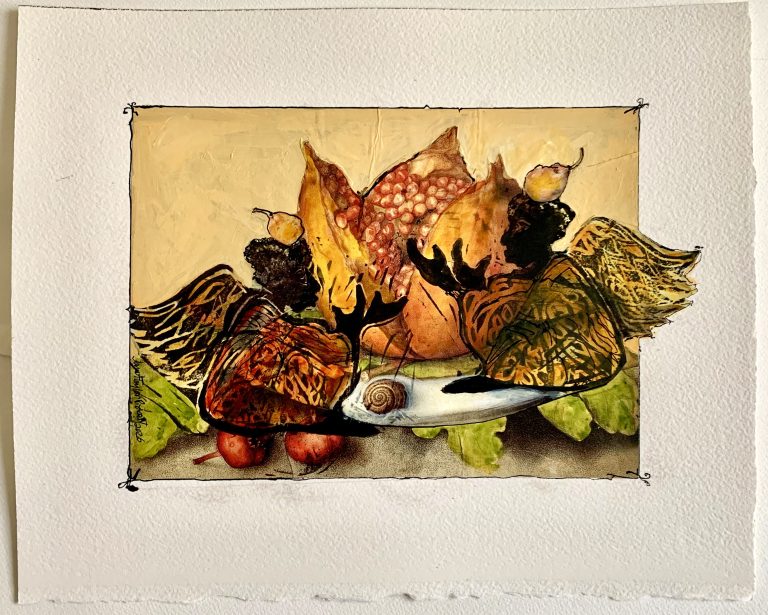
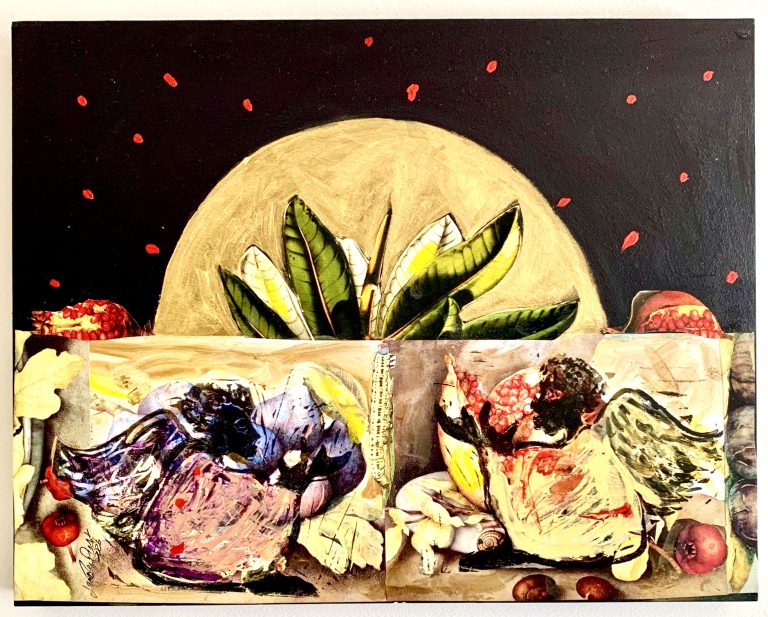
Janet Taylor Pickett Conversation Regarding Persephone, 2026 Acrylic, watercolor, pen and ink; the artist carved stamps on 300 lb Arches 11 x 14 inches Signed, dated, and inscribed
THE MERLOT MANUSCRIPTS:

Janet Taylor Pickett and Giovanna Garzoni

November 11 – December 16, 2026

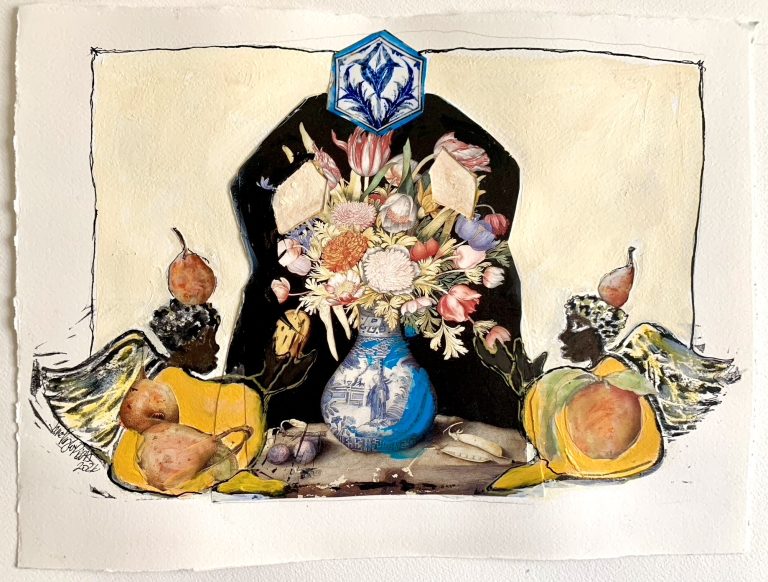
Across four centuries, a shared vocabulary of color, botany, and form bridges the work of 17th-century Baroque master Giovanna Garzoni (1600–1670) and contemporary artist Janet Taylor Pickett. While the modern nomenclature of The Merlot Manuscripts treats “Merlot” as a purely color adjective, its visual weight is deeply rooted in the historical archive. This exhibition presents a cross-generational showcase where historical precision meets modern reimagining. The luminous, deep-wine shadows of her botanical vellum pages: Garzoni relied heavily on madder lake—a prized, organic Baroque pigment used to glaze deep berry tones over nature’s most symbolic offerings. This rich palette anchors her celebrated renderings of heavy, textured pears and bursting pomegranates. These fruits carry the ancient weight of myth; the pomegranate, split open to reveal its ruby seeds, invokes Persephone—a timeless emblem of both subterranean darkness and explosive earthly fertility. Like Persephone, who traverses two realms, these fruits signify cyclical return, abundance, and the threshold between worlds.

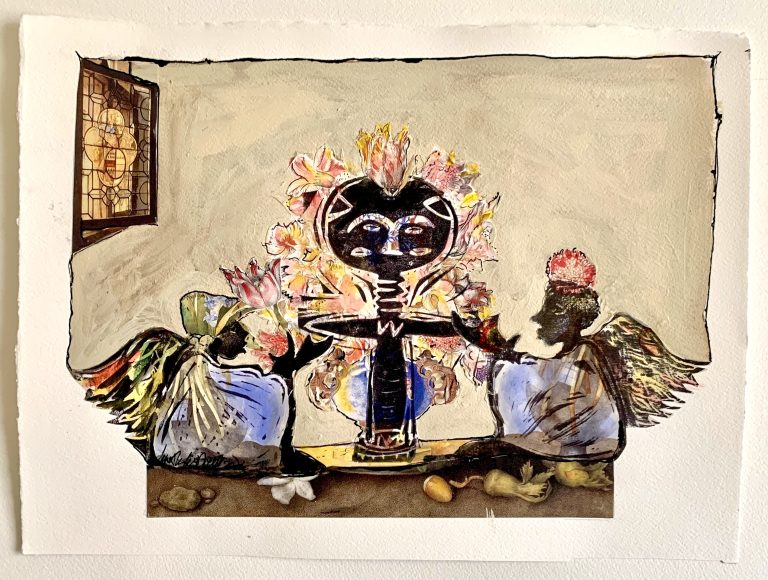
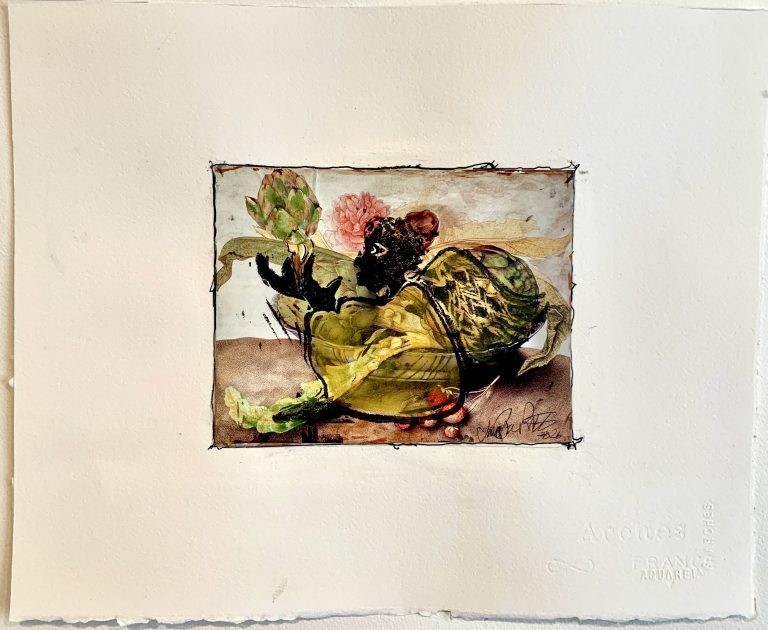
In these 2026 collages, Janet Taylor Pickett enters the historic margins, introducing a ritualistic vocabulary of sacred repetition and meticulously composed imagery. She cuts, layers, and re-presses Giovanna Garzoni’s antique pictorials, framing her compositions with hand-drawn pen-and-ink borders. These deliberate ink lines evoke the scholarly, historical framing of classical manuscripts, yet they also bridge a wild vortex of modern collage. Central to this tactile dialogue is Taylor Pickett’s use of handmade materials: within these borders, she imprints the surfaces with her own carved stamp blocks of winged angels, scrupulously crafted in the 1990s. Reminiscent of the divine messengers guarding Renaissance texts, these repeated silhouettes act as rhythmic celestial guardians that float through the composition. By integrating these intimate, decades-old hand-carved stamps with the physical, layered acts of cutting and pasting, the artist elevates collage into a profound archival intervention.

This subversion operates on a deeper art-historical plane, mapping Giovanna Garzoni’s Eurocentric naturalism onto the broader landscape of Janet Taylor Pickett’s African American heritage and the Black diaspora. The 17th-century botanical illustrator Garzoni used precise ink lines to frame, contain, and validate her scientific studies for royal collectors, serving an era of European global expansion, trade, and categorization. By drawing ink borders around her contemporary mixed-media works, Taylor Pickett achieves a brilliant dual effect: she honors the Baroque era’s strict, scholarly framing while breaking it, showing that the modern woman’s narrative cannot be fully contained by historic boundaries. Furthermore, Taylor Pickett’s additive collage technique radically re-contextualizes the Eurocentric archive. By grafting her own form—frequently featuring African textile patterns, the iconic silhouette of the Black female body, Akimbo, and West African sculptural motifs, including Akuaba—onto Garzoni’s iconic pomegranates, pears, and artichokes, she deliberately disrupts the historical erasure of Black womanhood in classical Western art history. Under the watchful gaze of allegorical figures, Taylor Pickett uses the myth of Persephone to construct a parallel diaspora narrative: a reclamation of ancestral roots that, like Persephone’s journey, navigates between disparate worlds, survives displacement, and finds ultimate earthly fertility and cultural rebirth.

Channeling the myth of Persephone adds a striking, dark Baroque intellectual layer to the exhibition. Through this intersection, The Merlot Manuscripts transcends its classical European symbolism to represent both abundance and the resilient fertility of African diaspora storytelling, asserting that the contemporary Black female archive is not merely a footnote to the Western canon but its vibrant re-authoring.


WATCH THE VIDEOS

Hank Kim
Hank Kim

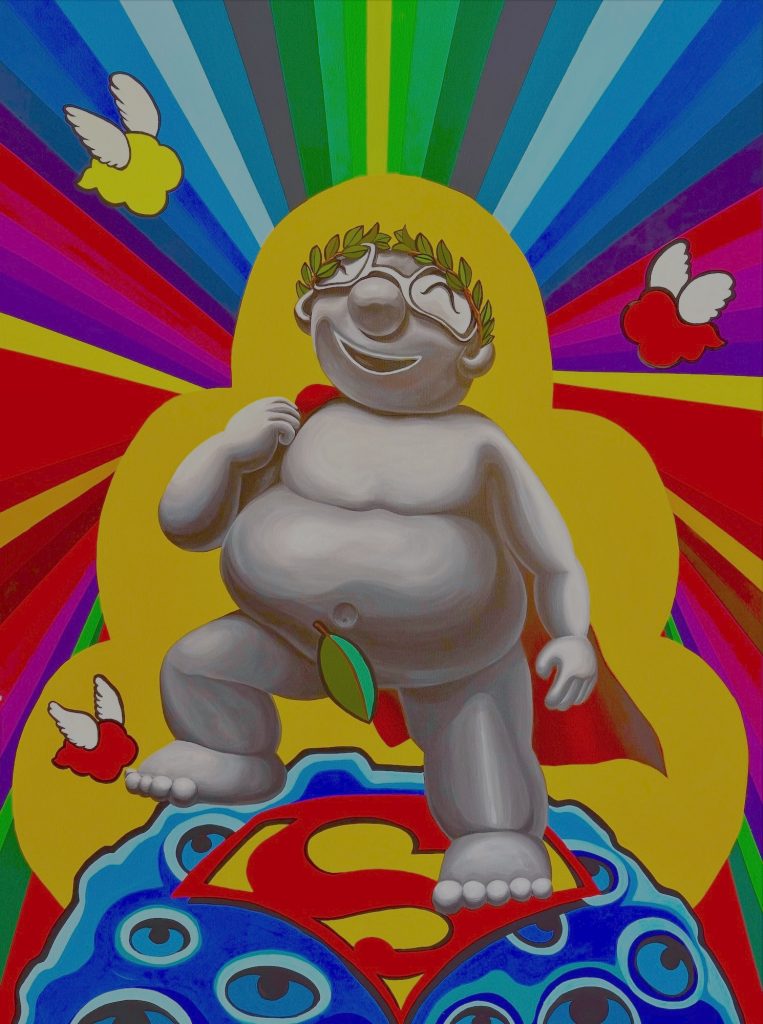
Hank Kim (b. 1972)’s art is rooted in “Everyday Life Aesthetics,” drawing on vernacular histories and blending personal perspectives. Super Babies are on view, configured in bold proportions with sharply defined silhouettes. The aesthetic employs a minimal vocabulary to explore symbols of power. Through solid forms rendered in vibrant colors on sleek, durable surfaces, Kim distills ideas and references into basic forms. Whimsical and highly sculptural, these animated cels become relics of moments such as a single flight or eventual arrival. Minwha is a Korean folk art genre from the late Joseon Dynasty that subtly mocks the rigid aristocracy through lively colors and humor. Kim grafts these traditional Korean Pop Art motifs into modern sculpture—honest depictions of daily life and a desire to transcend reality as a superman. This anti-hero manifests his journey as an immigrant, family man, and artist. Kim’s work is built on memories of Danchung and the Obangsaek—the Korean five-color scheme. It represents a collective desire for cosmic harmony, stability, and peace, incorporating Western art influences and American Pop Art. It also reflects his embrace of life’s mud, a Japanese notion of wabi-sabi—finding beauty in imperfection—and Nietzsche’s Ăśbermensch, which seeks self-mastery and dominance. While Kim’s approach champions life’s humble beauty, it ultimately points to hope and positivity. David Super Baby echoes in its vividness and flatness an arc toward a contemporary aesthetic. Hank Kim has held numerous solo exhibitions and has participated in over 300 group exhibitions. He earned a BFA in painting from Suwon University, an MFA in painting from Sungshin University, and an MFA in sculpture from Lehman College, CUNY. He lives and works in New Jersey.

ARTIST

Janet Taylor Pickett and Giovanna Garzoni